
Criss Cross Quiz
Host
Jeremy Hawk (1957-61)
Bill Grundy (1964)
Barbara Kelly (1964-67)
Broadcast
Granada for ITV, 17 June 1957 to 8 November 1961 (approximately 170 episodes in 4 series)
Granada for ITV, 8 July 1964 to 22 September 1967 (approximately 50 episodes in 4 series)
Synopsis
Noughts-and-crosses with questions chosen from 98 different categories. Every right answer earned you £10 (worth about £150 in today's money). If the game was drawn then in the second round the challenger went first and the questions then went up to £20.
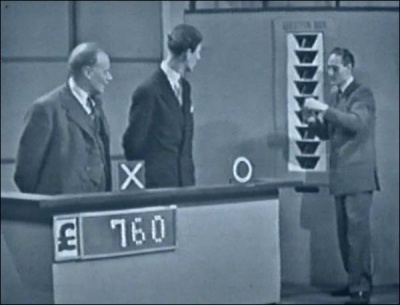 Hawk and contestants during a game
Forty years before Who Wants to be a Millionaire, this was the original "water-cooler" show. Airing three times a week in summer 1957, it was a ratings smash, newspapers gave breathless recaps of what happened on screen, and the big winners became famous. A move to one episode per week for the autumn and winter only heightened interest.
It helped that the prizes were huge by the standards of the time. Rodney Challis Sowerby was the first contestant to break four figures, and took home £2020 in December 1957. Then, after beating 16 challengers across seven episodes, journalist Rushworth Fogg of Glasgow won £2360 in March 1958 - something like three years' earnings for the average worker. After that year's summer break, prizes were capped at £1000 by the producers.
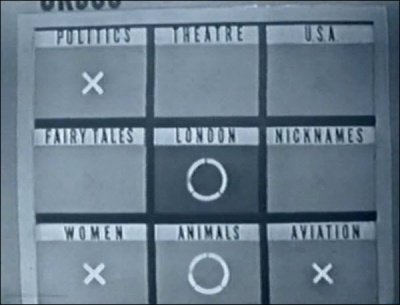 Some great categories here
Like all bubble shows, Criss Cross Quiz soon fell from fashion. A few well-known faces mixed it with the civilian opposition - most notably theatre actress Margaret Rawlings, who won £250 in May 1958 and gave it to charity. A summer break in 1961 allowed Concentration on air, and Criss Cross Quiz wouldn't return for three years. When it did, it was to a much more muted reaction.
There was also Junior Criss Cross Quiz, which ran alongside the main show for the whole run.
Key moments
One contestant walked away with £2,360. Not surprisingly, they put a limit on the number of times you could win shortly after. In fact, Simon Lewis tells us:
- I appeared on Criss Cross Quiz in (I think) early 1960. My final winning score was £1080, but I was only allowed to take £1000. I was told that the reason for this shortfall was that as a result of the quiz show scandals in the States which occurred in the late 1950s (the excellent film directed by Robert Redford came out in 1994), the UK producers had been told to reduce the temptation to cheat by reducing potential winnings.
Inventor
Based on Jack Berry and Dan Enright's US format Tic Tac Dough.
Trivia
Just to get on screen, contestants had to sit an exam of 100 questions; the chief examiner Robby Robertson complained that "housewives, in general, are shockingly ill-informed". Maybe it's your syllabus, mate. Questions on the show were set by Marjorie Giles, she made sure there were nine questions available for each category, just in case there was an endless series of errors.
Attentive viewers spotted a problem with the way categories were shuffled after each pair of questions - the category in bottom-left would move to middle-middle, and then to top-right, so an expert in that category could win very easily. Producers fixed this after a few weeks, but not before some contestants had found the pattern.
The final two contestants were Anthony Douglas from London and Rennie McGowan from Liverpool. On the very last programme, because the game was unfinished and there was obviously no way of continuing the game, both contestants were awarded £10 for each score they'd made on the board. And that was that.
Our thanks to Roz O'Hanlon who helped out with the details and adds:
- I was a contestant on this show in 1966 when Barbara Kelly was the question master. Unfortunately I only got £10 which was a premium bond and not cash. I still have it today and as yet have still not won anything on ERNIE.
Merchandise
A board game was produced.
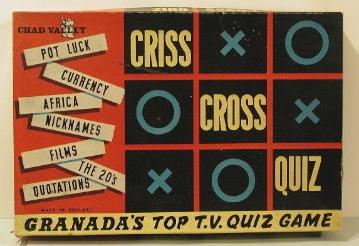 Surely the only quiz game ever to include "currency" as a category.
Videos
A late era episode, hosted by Barbara Kelly
Pictures
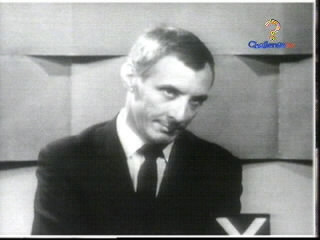 A contestant.