
Handcuffed: Last Pair Standing
Synopsis
Nine pairs with opposing views are shackled together for a fortnight.
They say you should walk a mile in someone else's shoes before insulting them. Handcuffed took that to the logical extreme, forcing people to live together for two weeks.
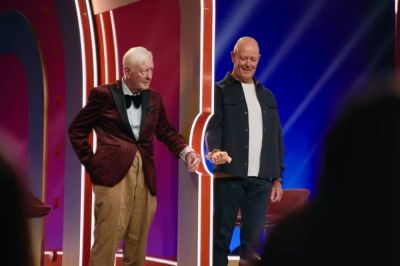 This pair are about to meet.
Each pair was handcuffed in front of a studio audience, then took the train back to one of their homes. They'd live and shower and work together for a few days, then move to the other partner's place for a few days. The couple are then sent to a holiday resort by the producers, where they can enjoy themselves and do some work they wouldn't normally do. A day in isolation forces the two to chat, before a quiz to set up a final dash to the prize - from Loch Lomond to a location in London, via Portmeirion in north Wales.
At any time, the couples can choose to separate; they always have access to a key, which will open the handcuffs in a trice. Of course, if the couple uncuff, they're out of the running for the big prize.
 A couple of players consider what to buy for dinner.
Almost inevitably, the opening episodes concentrated on couples that didn't show much tolerance, and split quite quickly. The series was noticeably unbalanced, spending four of its six episodes meeting the players at home, with a lot of time on contestants who left early. The holiday part of the challenge was compressed into one episode.
Though it used the format of a reality show (the seminal Wife Swap is a clear influence, and the final owes a lot to Race Across the World), Handcuffed was primarily an excuse to show the common bonds of humanity. The prize was an incentive for the participants to show tolerance to each other.
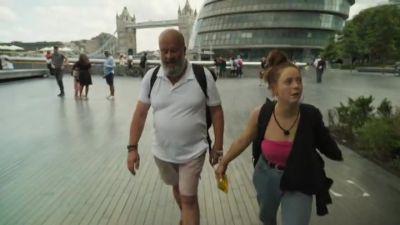 Anthony and Tilly were the stars of the show, and became very close friends.
It's a cliché to say that contestants "went on a journey", but there is evidence that a lot of contestants did reconsider their lives after this experience. One gave a public apology for racist remarks he'd made, and set about improving the community. Another was shown how poor people live, and made changes in his own life. Two political people were reminded that there is much more to life than points-scoring.
Eventual winners Charlie and Rob almost fell apart when Charlie's husband found out that Rob made explicit content for gay men. "What will the community think?" Later, we found the community thought, "Oh, he's an entrepreneur, just like us." The winners, like all the finalists, overcame their own inhibitions and prejudices.
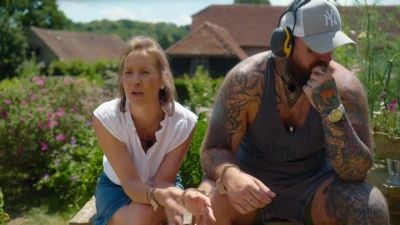 Charlie and Rob took the top prize.
How did they get contestants to talk frankly about their partner without their partner hearing? Noise-cancelling headphones, playing music or noise at a great volume.
Handcuffed used a not-quite-linear narrative style; each couple's events were shown in chronological order, but we reckon that narratives between couples were shifted in time. The result was a better show, telling its story more effectively.
The series billed itself as a social experiment, and clearly succeeded in its aims. It is difficult to see how they can do a second series with the same integrity, and that might be the best praise we can give.
Champions
Charlie and Rob