
Weaver's Week 2026-02-22
Last week | Weaver's Week Index | Next week
We can't declare a bank holiday to mark the birthday of Bruce Forsyth, who would have been 98 today. We can do something almost as self-indulgent, as we reflect on 25 years of Weaver's Week.
How it all began
The Week traces its origin to – well, take your pick. A review of World Wise for the school magazine when we were in the First Form? A little fanzine on Fifteen-to-One we circulated amongst a couple of friends? Deciding that we didn't want to go on our university tv station's quiz show because the prize round was questions on alcohol and our knowledge of booze was even shallower than a poorly-poured pint?
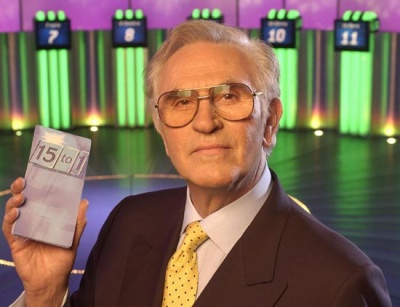 William G. Stewart, a superb host and producer.
We deem that the Week properly traces its origins to 4 November 1999. We were on "gardening leave" between employment contracts, but there's not much gardening to be done in the autumn. There was a tradition for someone to watch Who Wants to be a Millionaire, and recap what happened for the benefit of Usenet readers. We stepped in to recap that series, and people seemed to like it. We carried on for other series later that year, and posted the recaps by email to a game shows email list we'd stumbled upon.
Recapping every question on every episode of Millionaire is draining, especially when Chris Tarrant is such a good host. To break up the monotony of another player taking £8000, we added in notes about other game shows into the ad breaks. The rise of Big Brother, the stupendous success of The Weakest Link, whatever Trust Me With Nick Bateman was. Eventually, we made our peace and left Millionaire recaps to other people, and took our keyboard to fresh fields.
"Fresh fields", in this case, proved to be the bits we'd previously put in the ad breaks; we stopped posting to Usenet and just went on the mailing list. Our first review was long-forgotten daytime filler It's Not the Answer, then we looked at Jet Set and Touch the Truck. And, mostly, The Mole – we wrote a lot about the first series of Channel 5's reality show, and full recaps of the second series that autumn. By then, we'd also covered Survivor and Big Brother. David, the editor of the UK Game Shows Page, had asked to pop our column up on the web for posterity; we readily agreed.
 Survivor failed in two generations.
Looking back on these early works, it's clear that our style was a work-in-progress. For a couple of years, we wrote the column like a diary, which would always make Quizzy Mondays the first thing anyone read. The column reflected other influential television writers of the time, so bounced between the mateyness of TV Cream, and the accessible intelligence of Off The Telly, and the aggressive snark of Television Without Pity. And we were rather pretentious – it was about 2008 when one of our friends took us aside, sat us down with a copy of The Economist Style Guide, and told us that we had plenty to say, but our over-formal style was really getting in the way, and asked could we please be clearer.
Over the years, we've seen some tremendous programmes, and some atrocious programmes. We've fallen in and out of love with University Challenge at least twice. We've summarised two decades, completed an epic series on which game shows had the most episodes, bourne witness to a never-ending parade of BBC disasters at Eurovision, we've honoured shows as massive as The Traitors and as niche as Hannah-Oke.
This special edition tells the story of the Week through eleven editions. They may not be the best writing, some of what's linked will not stand up to fact-checking or scrutiny, and the opinions we put down at the time might not be the opinions we hold today. These are little milestones, markers as part of our ongoing history of new game shows.
Remember Fame Academy? Not many people do. The competition hot-housed a dozen young singing talents, gave them intensive coaching on vocal capacity and songwriting ability, and invited them to perform for our pleasure and ultimately decide the winner. Young people grew up on network television, on shows hosted by Patrick Kielty; and on CBBC with shows featuring Jake Humphrey and Caroline Flack.
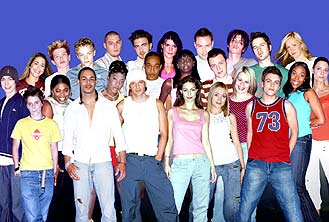 The series two contestants, most of whom were forgotten by the end of 2003.
The first series had launched with an absolute shocker of a live show, it looked like amateur night because it was amateur night. Things improved towards the end of the series, and it gave us the songwriting talent of David Sneddon and the long singing career of Lemar. Series two just asked everyone to perform solo, and gave far less attention to songwriting and dancing. While the viewing public delivered the right winner – Alex Parks was by far the most charismatic and talented performer in the series – it was remarkably mean-spirited and all left a horridly sour taste in the mouth.
Where was the public service remit, we asked? Sleeping, not quite dead. We got a whiff of it on the next autumn's reality show, Strictly Come Dancing. Somewhat later, So You Think You Can Dance demonstrated that entertainment shows can also nurture careers; the apotheosis came in Got What It Takes?, where we first saw the world-shaking talent of Lola Young.
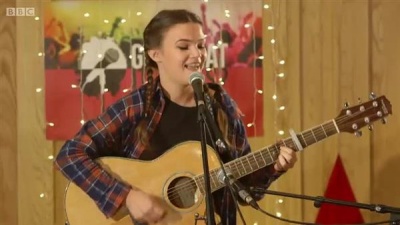
Turns out that we do like a well-produced, well-made, interesting performance show. We find a lot to like in the idea of the European Broadcasting Union, and its annual Song Contests have been fertile ground for many columns over the years.
This column charted the flowering – and withering – of children's shows. From the beginning, we've taken children's programmes seriously: we expected CITV's Twister to be at least as good as the later Take on the Twisters, and we were not disappointed.
Every generation of children has their own entertainment show and drama. For the Week, it was Jigsaw and Zammo's class on Grange Hill; our friends a few years younger raved about Knightmare and Byker Grove. Children born in the mid-90s had the absolute peak of entertainments, with CITV's Jungle Run and CBBC's Raven each setting challenges in a lightly-fictionalised world.
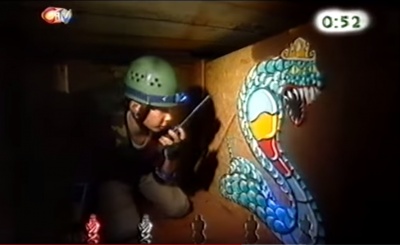 Jungle Run sets a communication challenge
Jungle Run was superb challenges and slightly superficial world-building: the Jungle King was a motif running through challenges like the one with the moving walls, the one where they get stuck in traps and have to be unlocked, and the one where they balance off a rope bridge to grab baskets. Raven had the advantage of being set outdoors, so could climb trees and jump off tall poles; and it took time to flesh out the baddie and turn Nevar into a properly evil character.
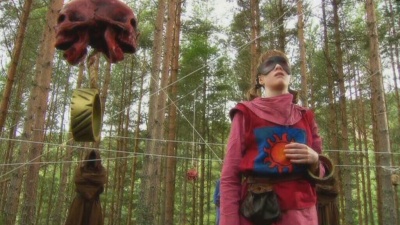 Blindfolded, the young warrior must collect rings and not touch the threads.
Our featured review comes from the 2005 series, where we felt that Jungle Run was every bit as good as a slightly disappointing series of Raven. Though we didn't know it, that would turn out to be the final series in the jungle; ITV chose to make fewer children's programmes, and that was because CITV was starved of funds, and that was because of interventions by activists who thought they knew children better than the children themselves. 2006's "ban on unhealthy foods on children's telly" is echoed in 2026's "ban on children having social media accounts"; the intention may be noble, but the implementation denies children's agency and prevents them from learning by making their own mistakes.
We don't like being good at obituaries.
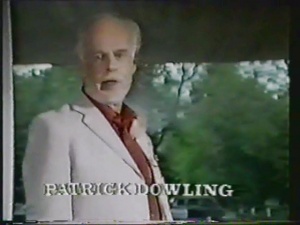 Patrick Dowling, 1919–2009.
Over the years, we've developed the skill. We take in many sources of information, find the common threads linking them. Maybe we'll spot the contradictions that might make a source more or less reliable, and iron them out. Then we can fashion a story out of everything we read: a detail here, a fact there, a narrative entirely of our own. This skill is most easily seen when we summarise someone's life, the obituary focussing on game shows.
Looking back, our first really good obit was for Jade Goody, who had died in March 2009. She'd lived her life in public, and news of her terminal cancer was common knowledge; we were able to prepare this a little in advance.
There was no such preparation for Patrick Dowling: we knew he was an influential figure in the story of children's television – he'd created Vision On, and The Adventure Game. Only when digging through interviews did we find his connection to Why Don't You…, or that he'd remembered a musical arrangement and brought it back a quarter-century later. To the best of our knowledge, none of the print newspapers published an obituary for Patrick Dowling. That's their loss, and gave this column an opportunity to write at length about a key producer in the story of television.
We published further obits from time to time. The grim procession of celebrity deaths in 2016 was depressing, and we decided to write about some of the living stars, share the joy while they're still around to be celebrated. The prototype was quiz legend Daphne Fowler, on her retirement in 2014; subsequent features covered Bruce Forsyth, Nicholas Parsons, Chris Tarrant, Noel Edmonds, and others. We hope to run more of these celebrations in the coming months and years; we will surely need to run more obituaries.
This column caught bits of the first series of Big Brother, then watched the second and third series in full. Trying something different, we watched series 4 solely through the live feeds, eviction interviews, and Big Brother's Little Brother; if you spend long enough with a group of people, you will find they are interesting and complex characters.
People who only watched the highlights shows came away with the false impression that series 4 was "dull"; in response to this myth of their own making, the producers made series 5 nasty and horrible. We gave up halfway through – literally, concluding in the middle of one Saturday night prize task that we didn't give a flying chuff about this series. Although we let the show stew in its own room for a few years, it became clear that Big Brother eventually found its balance, and we reckon the last Channel 4 series – and later the first on Channel 5 – were entirely reasonable television.
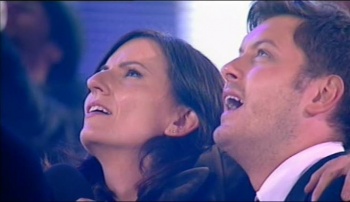 The Queen and King of Big Brother.
By taking the long view, we were able to summarise Big Brother, through quotations and memories and a sharp eye for the hypocrisy of commentators. Including ourselves; this column is a personal and partial record of the last quarter-century, and it reflects our preferences. Another writer might not do Quizzy Monday, but do the weekly spot Cooking With Gas, or do a Song And Dance Update.
We've been able to document shows through their various versions – The Weakest Link said goodbye in 2012, had a brief revival a few years later, and a full series in 2020. We've seen shows as they evolved, reviewing The X Factor on 19 November of 2005, 2011, and 2016; we've seen shows that chose to stick in aspic, as all three editions of The X Factor were Movie Night. And we've looked back on shows from the last century, from Jigsaw to The Golden Shot. There's a look at every broadcast version of The Price is Right, and as many as we could find of The Krypton Factor. These nostalgia pieces are an honest appraisal of a show, warts and all; we don't shy away from pointing out the flaws, nor do we shirk from praising ideas that became influential.
Daytime television has been the bread and butter of this column since it began. We've followed hit ideas – The Weakest Link moved to primetime, followed a decade later by Pointless and The Chase. We've cheered for great hit shows like Tipping Point, and been narked when great ideas didn't quite work, like Five Minutes to a Fortune. We've seen shows that came close to greatness, such as !mpossible, and we've seen shows like Freeze Out that still make us wonder how they got to a pilot.
Pressure Pad is one of very many daytime shows. It came, it was an acceptable watch for a year or two, and then faded from memory like the fidget spinner or the Ben 10 Omnitrix. In the case of Pressure Pad, it's partly because the host's backstage abuse became common knowledge. This column has no problem when broadcasters stop showing light entertainment hosted by unsavoury characters – those shows cease to be entertainment.
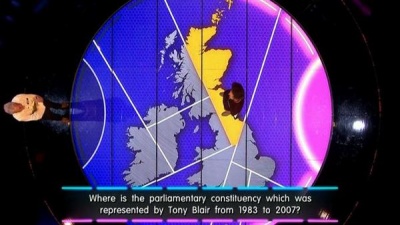 Stand on the section containing Kazakhstan.
Like every good daytime show, Pressure Pad had a central gimmick, and used it to the maximum. Here, it's a massive LED display screen in the middle of the floor. Over on Two Tribes, it was splitting the contestants into roughly equal teams. For Pointless, the gimmick is the column.
And like many good daytime shows, Pressure Pad was made up of distinct rounds, each with their own flavour. Eggheads varied the topics of question, but kept the same central idea. Tipping Point changes how counters are won, but keeps the same action when they have been earned. While we weren't sold on the Pressure Pad jackpot gamble, the rest of the show was perfectly decent, could have run for ages, came to an end after two years and nobody really noticed.
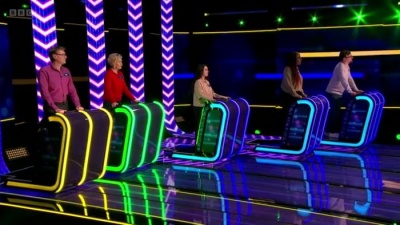 And it's go! go! go!
The best daytime shows have a certain something – Bridge of Lies the massive playalong factor, The Finish Line is beautifully hosted by Roman Kemp and Sarah Greene, and ITV's Riddiculous tests the parts other quizzes just don't. As long as there is linear television, there will be a need for cheap and repeatable shows like these, many of them repeated on the Challenge channel and on the newer ITV Quiz channel.
Ah, here's an oddity. The Question Jury was a two-series wonder, from Channel 4's daytime schedule. It's the one where a small group of people are put in a room, asked general knowledge questions, agree on an answer, and eventually stand to win some money. It came, it went, nobody paid much attention. And we reckon it's a show they could tweak and revive and bring back right now.
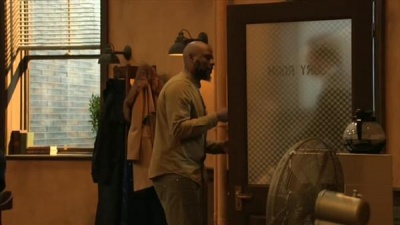 Players collect questions from around the door.
Two reasons for this recommission. First, the public has grown to love people sitting around the table, discussing questions and throwing out ideas based on hunches and vibes. It feels very much like the quiz version of The Traitors and those round table discussions. And second, the show is also a people show: performance in the quiz will help, but eventually the winner has got to impress everyone else around the table, and perhaps be helped by them to win the money.
Better questions is an essential tweak. Too many of the posers took the form "the most this", "the biggest that", "the smallest t'other". The questions' syntax and phrasing tended to be obscure and imprecise, and sometimes based on lazy assumptions not present in the original source. And, in fairness, the contestants were often shown leaping to incorrect conclusions rather than settling down and thinking through their responses: The Question Jury was a room full of Amandas when it needed a Stephen Fry.
 Stephen knows what a good answer looks like, even when he doesn't know it.
The Week's archive contains over 1200 columns. Not even we remember what's in all of them, and a random dive into our archive – as we did while preparing this recap – can give something interesting.
Although this is a topical column, the Week tries to present a considered and thoughtful response to game shows and the people involved. We want to be the well-considered topical column they used to run in Sunday newspapers, at least a tenth as bright and erudite as our writing hero Alan Watkins of The Observer and Independent of the nineties. (And, just as Alan Watkins made "chattering classes" and "men in grey suits" familiar ideas, this column brought University Challenge the personal scores used widely, and the designation "repêchage round".)
 Mel and Sue keep the BBC bunting.
We do sometimes have to react to breaking news, especially when it's big enough to make the national news bulletins. "Breadxit Means Breadxit" remembers the topsy-turvy week when The Great British Bake Off left the BBC and was signed by Channel 4. The news was a huge surprise at the time, something we didn't expect to see happening, and the reverberations sent shock waves through the television world. The biggest series on television, moving away from its traditional home on the Beeb, and turning up on (gasp!) commercial telly! Mel and Sue aren't going! Love Productions came across as money-grubbing capitalists! Channel 4 were hypocrites!
None of this particularly mattered, not from the distance of ten years. Mary Berry also took the opportunity to step back from the programme. Channel 4 were true to their word, kept the full hour's programme (albeit with commercial breaks at awkward times), and continued to honour a pleasantly diverse and inclusive programme. Would they have made and kept such a commitment if the viewers hadn't kicked up such a fuss at the news? Quite possibly not.
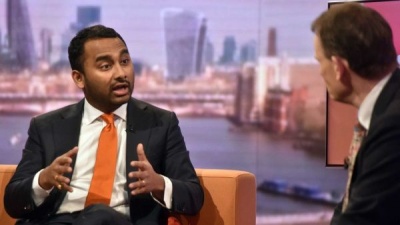 Amol Rajan turns up everywhere.
Some years later, there was an outcry when Amol Rajan was announced as the new host of University Challenge. Our quizzing friends were aghast at this intrusion, and we summarised their objections. Three reasons were apparent: he came across as shallow and insincere; his apparent worldview was socially regressive and not compatible with contemporary quiz; and he's yet another bloke from Cambridge. After almost three series, it's clear that Rajan is sincerely encouraging the contestants, respects people for who they are, and has precise and swift diction. He is, undeniably, yet another bloke from Cambridge; it would be churlish to hold this against him.
Our favourite bit of journalism cosplay came when we took the Week's camera on a trip to the Eurovision Song Contest in Liverpool, and reflect on how the friendliest city had embraced the contest, and shown solidarity with Ukraine. We hope to get the opportunity to do something like that again.
 Liverpool did a cracking job.
It's fair to say that the Week has found a particular tone. We are affectionate, we like a well-made game show, we love programmes that surprise us and give us something to think about afterwards. We will look back at game show history, but we will not necessarily say that things were better in the past, nor will we reflexively say that the present arrangements are the best possible.
 Gem, the host of Swashbuckle.
From time to time, the Week lets our hair down. Everybody needs a place to play, everybody's wig needs a wash, and we'll be playful with shows that can take it. And we do like a piece of silly humour, whether it's jokes inspired by The Two Ronnies and Monty Python or something more contemporary.
These threads of playfulness combined for our review of Cbeebies' Swashbuckle, a show for the very young, which we took as a direct lesson in religious morality for Easter Sunday. As the date suggests, it was an April Fool's effort, taking the rise out of ourselves, and one we hoped would raise a chuckle. (The best April Fool that we wanted to emulate? Janice Long's well-researched and generous piece on BBC Radio WM in 2005, saying that Birmingham Airport was to be renamed after Ozzy Osbourne. Two decades later, the airport need to reconsider their position.)
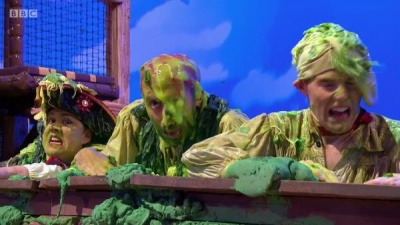 Another bad day for Captain Captain, Line, and Cook.
Seeing as how it was some years ago, we can tell the story of how we'd set this up in the column. One of our friends had had a child, and let them watch Cbeebies from time to time. From a very young age, it was clear that Swashbuckle was amongst the youngster's favourite shows, and they wanted to grow up to become a Captain like Captain Captain. We'd heard this in summer 2016, and spotted the coincidence of April Fool's and Easter was coming up, so we dropped in an occasional line that "we don't understand Swashbuckle, we'll have to have a four-year-old explain it to us". By the time our friend's child was four, they were able to talk for ages about Swashbuckle, and helped make sure our ideas were seaworthy.
This is a game show column. A column about game shows, as broadcast on broadcast television, or on broadcast radio. We are slightly reluctant to cover anything that is only available on the internet. In part that's because if we cover something we feel a slight moral call to cover everything. And in part because we cannot be bothered to maintain eleventy-billion subscriptions to eleventy-squillion streaming companies; and even if we could be bothered, our credit card company would send The Management round our house in very short order.
Nevertheless, we've cheered for Quizzy Dan, who hosts a celebration interview on the afternoon that we've publishing. We're pleased to have plugged Royal Flush, who now works behind the scenes on some great game shows (and we know they're great because we've said so). And we're chuffed that Ash The Bash is back from an unexpected hiatus this very week.
 We went inside a cell in Aztec. Almost didn't come out.
Life is more than just game shows. From time to time, we will promote an outside project, we will write about something that's a bit Off Topic. We looked at the DASH puzzle hunt in 2013, two years before this column actually ran the event ourselves. We went round The Crystal Maze Live Experience, and wrote about it six months later. More recently, we've written about Strange Games and London's Transport Race.
Our rules for writing about off topic matters are quite simple. The event has to have a link – however tenuous – to the world of game shows. If we wanted to write about Radio 4's observational documentary The Archers, there's a whole other forum for that. And we have to believe that the event is clearly worth the time and effort of doing it. When it's a free event, we have to believe it's worth your time; when the event is theatre and charged, it's got to be better than spending the price of the ticket on a meal with someone lovely.
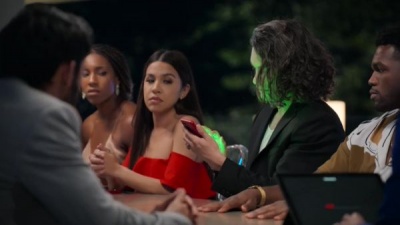 A rare streaming review: The Mole on Netflix.
Is our decision to concentrate less on streaming providers a sustainable idea? Probably not; we're pragmatic enough to accept that whatever the big media companies want will be allowed by the regulators, whether it's in viewers' best interest or not. And there will eventually be rationalisation in the space, KYTV's recent offer to bundle four of the largest sites into one subscription shows the way the industry wants to go. When there's something compelling to review on streaming, and when we've got something interesting to say, we'll say it.
If this column has a guiding principle, it's that game shows hold up a mirror to society. Entertainment reflects the wider world, it rarely leads change, but is often a visible signpost. We can see it in the prizes for big shiny shows, moving away from consumer durables and white goods, moving towards once-in-a-lifetime experiences and big piles of cash. We can see it in casting decisions; same-sex couples were an oddity when this column started, now nobody bats an eyelid at the concept.
 The most important thing about food: the picture
The Great Cookbook Challenge was a one-shot series that told us a lot about the society of the early twenties. How the idea of a "cookbook" had transmuted from the mother-to-daughter oral tradition, and turned into something for capitalists to make their slice. How publishers were very small-c conservative, didn't want to rock the fashion boat, don't want to address a book to teenagers. Don't want a book for dishes done in twenty minutes; when there's so much television to fill, the publisher's requirements are more important than the quality of the content.
Quickly, we saw that they were not looking for a great cookbook, but for a mass-market cookbook. Anything too "cheffy" or too complex would be shown the door. Discussion of the merits of the recipe was chopped down in a most ham-fisted frankenbite. And, after the first round of heats, the bulk of the show was about marketing the book. The photographs! The appearance on live television! The cover! The party for industry tastemakers! Never mind the content, feel the schmoozing!
Jamie Oliver was a guest on his own show: the challenge was set by the publishers, judged by chefs, and narrated by someone else. Ultimately, we reckon that the publisher knew exactly the book she wanted to publish, and came up with all sorts of reasons – some more convincing than others – to justify her selection.
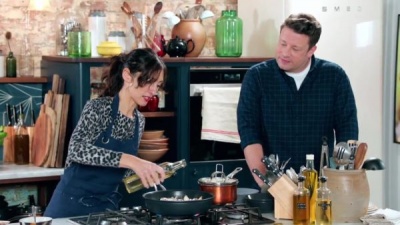 Jamie Oliver (right) with winner Dominique Woolf.
Game shows constantly surprise us. We saw a little contest, and got a lot to say about contemporary culture.
Mark Labbett often says that the best teams get the best Chasers, and he's well-placed to know that is true. This column is certain that the best shows get the best writing. A good show will allow us to chronicle what happens, and to discuss the reasons for that.
Great shows inspire us. The reviews go places that one never quite expects – often that we don't anticipate until the idea sneaks up on us and makes sense. The Traitors is the best show we've watched so far this year, and inspired the piece we think is best so far this year.
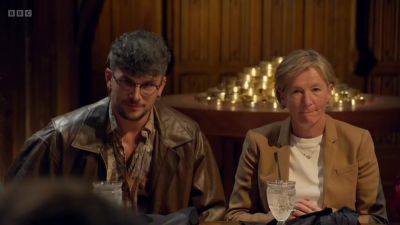 Amanda (right) was key to the result.
But we still have room to improve. Something even better than The Traitors will come along, and it will inspire us to even greater heights of description. Something more compelling than Jamie Oliver's Cookbook will give us another insight into society. We'll be able to remember someone more interesting than Patrick Dowling, and document something even more thrilling than Breadxit week. We look forward to sharing some more thoughts in the months and years to come.
We've not written the best Week of them all. We'll get there eventually. Just take it slowly.
Week, by Week.
Other news
No Quizzy Monday report, because there was no Quizzy Monday. It's back next time.
The BBC performer for this year's Senior Eurovision Song Contest has been announced. Look Mum No Computer is a historian of musical synthesisers, to the point of running a small museum about the instruments. The performer is active on video publishing sites, and throws concerts where he re-creates pop songs on analogue synth machines. At one point, they made an organ out of Furbies, a concept to melt the brain of Justin Webb on Radio 4's The Today Show. Look Mum No Computer is an internal selection, without input from the public, and shows the value of an internal selection – the televoters would not have chosen such a left-field act in a month of Mondays.
(And we have three months to work out if Look Mum No Computer is a band name, or an individual person who might be Mr. Mum No Computer on second reference.)
 Harry meets all the important people.
Interesting news from the BBC Religion Department, because they've made a big new signing. Harry Clark From The Traitors has made a one-hour documentary, discussing his Roman Catholic faith, and attempting to arrange a meeting with Pope Leoxiv.
Harry's fellow traitor, Paul Gorton From The Traitors, makes his presenting debut on BBC2's Do You Know Your Place? this week; he plays the role of a tour guide who may or may not be telling the truth. Vernon Kay hosts the show, which goes out in the Strictly It Takes Two slot after House of Games.
Also this week, Celebrity Puzzling pops back on Channel 5 (weeknights), and Great Local Menu kicks off its film series (BBC2, from Tue). Celebrity Lingo is back in a new slimline form (ITV, Wed), we've new Come Dine with Me and Four in a Bed (C4, Sat), and it's the Love Island All-Stars final (VM2 and ITV2, Mon).
To have Weaver's Week emailed to you on publication day, receive our exclusive TV roundup of the game shows in the week ahead, and chat to other ukgameshows.com readers, sign up to our Google Group.