
Weaver's Week 2026-02-15
Last week | Weaver's Week Index | The Week at 25
Review of The Traitors after some spoiler space.
Shall we demonstrate that this was a sensible and serious show?
 Never mind.
The Traitors series 4
Some people are yet to watch The Traitors and will be coming to it a few weeks or months – or even a few years – later. We're not going to spoil just yet, other than to say that it is a proper slow-burn series, the intensity really ramps up in the second half and it does get a lot better as it goes on.
And it would be rather rude to give away the result quite early, so if you don't want to be spoiled, head to the bottom right now.
 A brave assumption from Claudia.
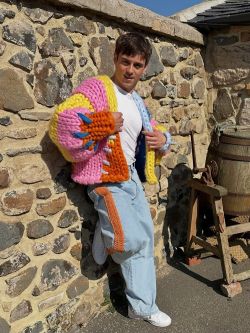
Beneath this somewhat oversized and almost entirely irrelevant picture of Tom Daley (who took part in The Celebrity Traitors last year), we give away the full result.
"Okay, see the Egyptians, they wore eyeliner to, um, ward off the evil spirits. They believed that if they outlined their eyes, that the good spirits would spot 'em easier. I read it in a book." But Tom did not read the book...
The winners were two players who trusted each other completely. They were there for each other, picked one another up, helped to deflect attacks, had each other's backs, and were absolutely the most faithful of everyone in the show. It was heartwarming to find Stephen and Rachel came out as the series winners, it was the fitting ending the couple – and we viewers – all deserved.
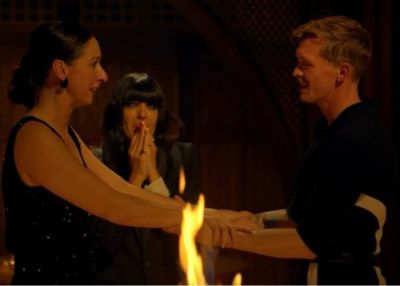 Aw, get a turret you two!
Freeze frame.
Record scratch.
You may be wondering how we got here.
(Red) cloak and dagger
Over the Christmas period, we saw trailers for The Traitors. Many of them featured a cloak in a bright scarlet red. This would be a major fashion change, as previous Traitor cloaks have been a deep emerald green. What's the story here?
Turns out that there was going to be (gasp!) a Secret Traitor. One so deeply secret that even we, the omniscient viewers, would not be allowed to know their identity. And the Secret Traitor would have much of the power within the turret; they would pick a list of three people who could be murdered each night, and the remaining Ordinary Traitors would only be able to pick one of these three.
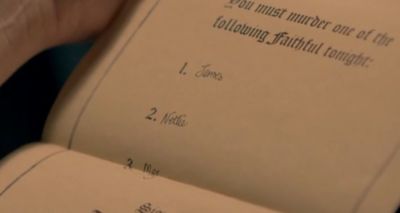 On the menu tonight: James, Maz, or Nettie.
Almost inevitably, the Ordinary Traitors were pretty hacked off by this imposition – they wanted to be monarchs of the turret, rulers over all they surveyed. And now they're being chopped at the knees, forced to select from this piddly little list? Pah! Sure, Jeffie didn't get a shield today, and he's been asking all sorts of awkward questions and zoning in on one of the Traitors, but as he's not on the list, there's no way to get him bumped off.
For us viewers, it was a case of jigsaw identification. Sure, we knew who the Ordinary Traitors were, they made no effort to disguise the original trio. And we knew that anyone who was on the murder list had to be Faithful; the Secret Traitor might be a secret, but they're not exactly stupid enough to take themselves out of the game. Had this gone on long enough, we could be sure that the Secret Traitor could be deduced. This column wanted The Traitors to have the courage of its gimmick, and stick with the Secret Traitor for as long as possible – until they were banished, or there were literally no other options left, or the Ordinary Traitors tried to seduce the Secret Traitor.
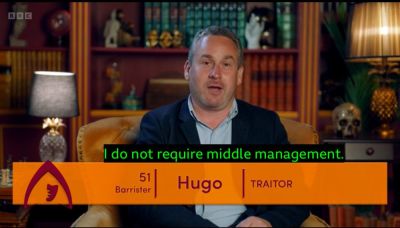 Hugo bristled at the imposition.
Instead, the show decided to witter on and on and on about the Secret Traitor for the first three episodes. Then the Faithful were able to marshal their resources and give a persuasive reason for why Hugo had to be a Traitor. And he was banished, and he was a Traitor. Excellent work, job done, hurrah.
And then the strangest thing happened. The other Ordinary Traitors, Rachel and Stephen, were told to carry out a mission in order to get the Secret Traitor to join them in the turret, and bring everyone together as Traitors. The mission was risky; before it, both gave their word that they would not write down the other's name on the voting slates. Team Traitor, in it together.
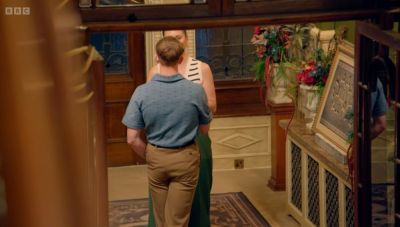 A pact sealed in red ink, with the family tree as our witness.
As a piece of television, the Secret Traitor just didn't work. It sucked the life out of episodes 2 and 3; when we really should have been getting to know the players somewhat better, the edit wittered on about this mysterious red-cloaked uber-Traitor. But as a plot device, it turned out to be absolutely crucial. Bonded through difficulty, the stress and strain of dealing with the third party, the Ordinary Traitors had an alliance that would prove to be the strongest of all.
Stephen and Rachel could lean on each other. Rely on each other. Talk in the turret, do their best to draw attention to someone else. Rachel had masses of experience in the social deduction game Mafia, and knew how to separate player from person, and to throw attention somewhere else. Stephen brought the honesty and humility, building and maintaining relationships with the Faithful team. Perhaps it helped that he was an outsider, with the unique perspective of a gay man from the islands of Scotland. People looked at Stephen's flamboyant clothes, perhaps they missed the expression on his face. Both of the winners faced some tough questions, both knew that they could count on at least one other person.
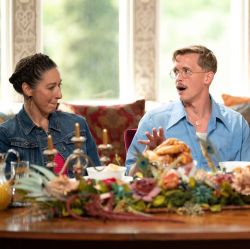 Rachel stifles a giggle as Stephen explains what he did with the croissants.
And even in the final moments, at the very last banishments, Stephen had the opportunity to stab his fellow Traitor in the back. He could have scooped the prize for himself, but Stephen knew he would have had to live with his conscience. He wouldn't be there without Rachel's support and guidance and brilliance. They'd got here as a team, they'd leave as a team. Stephen chose to keep to his word, and to share the prize. He came out vastly richer, and as everyone's hero. Shows like this work best when there's a basic level of trust between team-mates, and backstabbing blighters are left on the NBC version that literally nobody's watching.
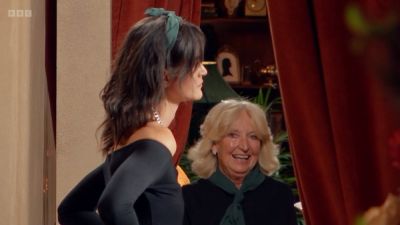 Fiona, the secret Traitor, peers out as Jade passes.
"I want to play on hard mode"
During the first episode, it's traditional for host Claudia Winkleman to ask the players if they are prepared to be on the Traitors team. It's more than a courtesy, it allows the producers to introduce players with a strong moral compass and no desire to be traitorous, such as Lisa the vicar from last year.
This year, viewers were allowed to see that Jade, a young PhD student, didn't want to be selected for the Traitors side. She later told The Guardian that this was a deliberate strategy, she had great experience in social deduction games, and had a desire to make the win even more difficult than it needed to be. Claudia granted the wish, of course, and made her initial selection from the other players.
Somewhere in the castle, a demon on the shelf heard the wish.
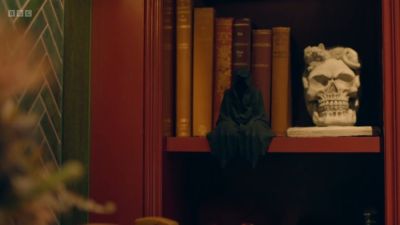 Hard mode? I'll give you hard mode!
"The game has begun. Please, remove your blindfolds." Players' eyes adjust to the light, after many minutes of being in an unnatural artificial state of blindness. Players' bodies adjust to the air, after many minutes of being in an unnatural artificial state of bondage. Amanda, a retired police detective in a sharp blazer, looks across the table and believes she notices something unusual about Jade's reaction.
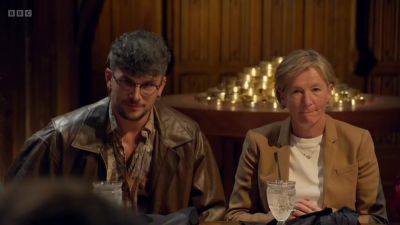 Amanda (right) has seen something.
And in this moment, the course of the series has been set.
Amanda will not let go of the idea that Jade's unconscious reaction – which we viewers never saw, and Amanda would describe in ever-more unlikely terms – were a tell-tale of the "fact" that Jade was a traitor. At the first round table for banishment, Amanda brought up her pet theory, forced Jade onto the defensive, and ended up voting for Jade. At the second round table for banishment, Amanda again brought up her pet theory, again forced Jade onto the defensive, and Amanda again voted for Jade.
And so it went on. At every round table, Amanda would bang on and on and on about how she had spotted something "different" in Jade, and seek her banishment. It became a vicious circle, nothing that Jade could do or say would convince Amanda that she was faithful, for Amanda had latched on to an idea and would not let go of it. However much evidence was presented that the trail was elsewhere, Amanda was dogged in her persistence. Even if they had revived the Seer role from last year, even if Amanda's desire was for a private dinner with Jade, even after Amanda had had the honeyed words dripped into her ears and been told Jade was faithful, we were sure Amanda would have found some pretext to continue her campaign.
This could only end in one of two ways: either Jade or Amanda would have to be banished. The Traitors wouldn't murder either of them – while the pair are arguing at the round tables, they are a smokescreen to distract everyone's attention away from the actual Traitors. And while Jade was being relentlessly attacked by Amanda, it was almost impossible for her to advocate any different theory, it would just be called deflecting from Amanda's attacks.
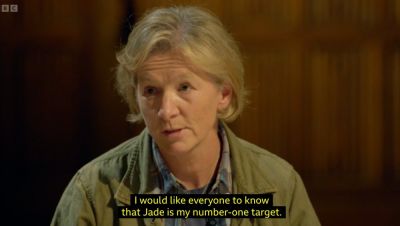 Clinging to number one like Bryan Adams.
The boil was lanced in the fifth episode, and Amanda was banished from the game. This was perhaps the biggest surprise of a series with many bizarre banishments, for Amanda suddenly seemed to be angling for her own exit from the show. The edit also seemed to be unduly mean, showing Amanda being in a conversation, yet having a different understanding of it than we at home were led to believe. Something very odd happened there.
Following a draw, and the Chests of Chance, Amanda went. Now, perhaps, Jade can be freed of the wearisome attacks and begin to advocate some theories of her own.
Or perhaps not. While in the game, Amanda had kept her previous profession – police detective – a secret from the other players. Fearing that her time was almost up, she decided to confide in her closest friend in the castle. In a twist that any fiction editor would dismiss as far too ludicrous, Amanda's closest friend was Rachel, one of the Traitors.
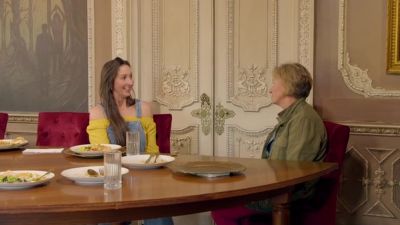 "Me, a cop, an expert, a senior detective, adept at finding lies, am confiding in you – a Traitor – as the only person I trust because it lends credence to my important ideas"
The short-term consequence of this was to spark a blazing row between Rachel and Fiona – the unmasked Secret Traitor – about whether Rachel was telling the truth. The feud kept simmering all day, and finally boiled over at the next day's round table, where Fiona was banished and left the castle.
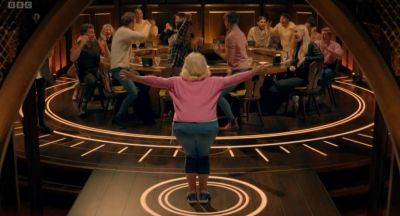 There's a party going on, and you're not invited.
The long-term consequence was that Rachel could keep reminding people of Amanda's flimsy critique against Jade. Everybody knew that Amanda was on the Faithful team, and it was now common knowledge that Amanda was a retired police detective. Surely that means she must know something about catching criminals, right?
Well, that is an assumption that a lot of people in the castle seemed to share, and a lot of people on the microblogging sites found risible. This column doesn't subscribe to the lazy stereotype that all cops are blighters; nor does this column subscribe to the lazy stereotype that police are above all criticism. We will judge each case on its merits. The skills Amanda brought to her time in the Metropolitan Police were not deployed to catch a traitor on The Traitors.
So the attacks on Jade just kept on coming. From Matthew, from Ellie, from James, from Faraaz. At every round table, it was relentless. The needle returns to the start of the song, and someone else sings along like before. We were saddened – but not at all surprised – when the whole situation got too much. As this column's younger self will attest, it becomes impossible to function when you're constantly being gaslit, when you're being undermined and bullied at every turn. Sooner or later, the emotions will overpower even the best player.
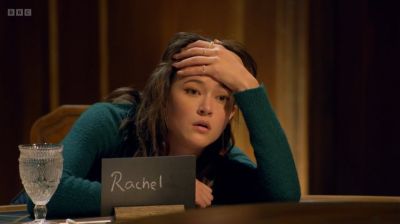 Same procedure as every round table.
Matthew had the opportunity and the grace to apologise in a timely manner for the hurt he'd caused. Amanda did not have a timely opportunity, and we found her words on The Traitors Uncloaked a little more conditional and less graceful than might be ideal. For James, revenge would be served through fate; after one interruption too many, Jade let her heart rule her head and voted for James to go. She'd planned to vote to Rachel, which would have banished the Traitor and would have completely changed the final day.
Some social deduction games have the concept of a "ghost vote", a final point cast by a dead player. The Traitors gives no formal voice to the banished or the murdered. Sometimes, their spectres haunt the castle, and we reckon that Amanda's ghost was the hidden vote for Rachel to win.
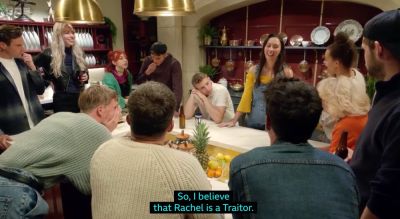 Rachel's meeting in the kitchen was hijacked by Fiona.
The Faithful divided, the Traitors united
For every Amanda on the faithful team, there was a Jessie. A hair and beauty expert from Hull, Jessie slammed into view with bright red hair, orange and yellow tops, and matching eye make-up. If ever there was a person to bring the sunshine into our lives, it was Jessie. She also brought the disability representation to this series, a stammer to make her appear nervous and hesitant.
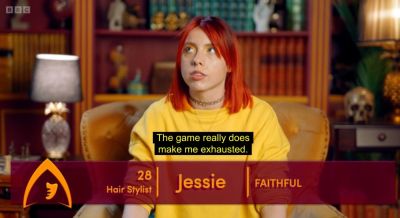 Us too, and we're only just getting started.
Jessie brought a keen mind and sharp observation skills. People trusted Jessie – she was never ever going to be banished, and had to be murdered in the most audacious way. She came up with accurate theories: there was at least one Traitor in a discussion with Ross on the second day, just before he was framed for a murder. And there was at least one Traitor in the cages of episode four, quite possibly one paired with another Traitor. Jessie had these theories, and the tenacity to pursue them, and the wisdom not to be caught in tunnel vision like some other Amandas were.
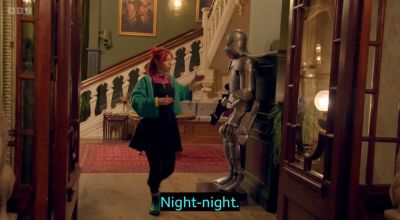 Jessie also brought a sharp sense of humour.
But Jessie had a problem: people didn't seem to listen to her. Both of her theories implicated Stephen: he was in the library with Ross and herself, and Stephen was the Traitor in the cages, defended (?) by Fiona. Was she sidelined because other people put forward newer ideas? Was it because Jessie didn't have the eloquence and fluency expected of someone who knew what they were talking about? Could the fact that Jessie was so trusted have worked against her; because the faithful knew Jessie was going to be around tomorrow, they could wait to test out her theories?
Harriet was another faithful player with an excellent nose for Traitor-hunting. Disguising her previous occupation as a barrister from the group, Harriet brought both her analytical skills and her practised persuasion to convince the jury – er, er, round table – to vote out Hugo. She also had a cast-iron case against Rachel, but moved just a bit too quickly for the rest of the group and that got Harriet banished.
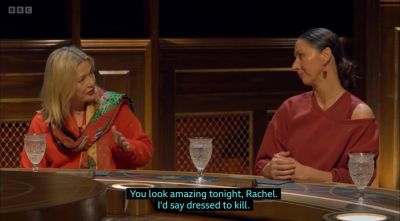 The Traitors had more fashion tips than any programme since Style Trial.
How did Harriet get her information? She talked to the Traitors. Literally. One of the missions in the middle of the series gave a few of the faithful a chance to put two questions to the Traitors. Harriet used her time to ask sharp questions of Rachel, we got the feeling these were "less of a question, more of a statement" questions.
At the next day's breakfast, Harriet came in with all guns blazing, and laid out all of her evidence at the table. She spoke with passion, with fire, and complete accuracy. And – lest we forget – this is immediately after Rachel has delivered a similar hard slam to evict Fiona from the game. Harriet spotted a Traitor-on-Traitor attack… and was convicted of the same herself. Rachel had had the day to prepare for this – possibly also an off-day in the filming schedule – and did enough to both rebut Harriet's attack and turn the force around. Harriet did herself no favours at the round table, channelling the spirit of John Major in a "vote for me or I go" speech, and was banished and left the castle.
 For £16,000, half a housebrick and an empty milk bottle.... deal or no deal?
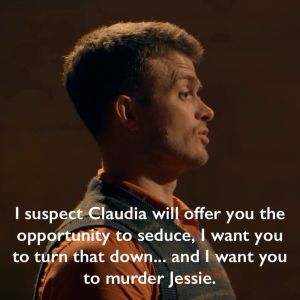
Two other players won the chance to put questions to the Traitors. Rachel didn't need to bother, seeing as how she would be putting questions to herself. Matthew, though, offered himself up as a Traitor in waiting: he suggested that the Traitors first murder Jessie then seduce him. "Do we have a deal?" he asked, in a manner reminiscent of The Banker.
Of course not. Having just got rid of Fiona, Rachel and Stephen were in no mood to invite someone else into the turret, not unless they absolutely had to. Sure, they can string Matthew along for a few days, long enough for him to dodge shields (thinking that he was going to be recruited and certainly not murdered), and long enough to sow a few seeds of suspicion and watch them germinate.
Matthew was the most obvious example of players disappointed that they weren't chosen as Traitors. With the exception of Jade, and of Harriet who seemed to want to go out in a blaze of glory, almost everyone had gone in with a strategy to play on the Traitors' team. Very few had mentally prepared to do the difficult world-building to connect all the dots, build alliances, be lucky and be right.
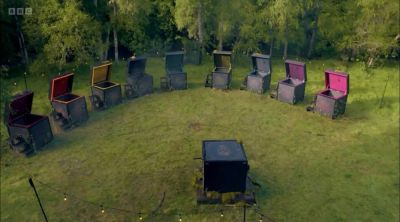 Another packed meeting of the Stephen Mulhern fan club.
Questions in the Chapel was one of three points where the Traitors could have seriously blundered, aside from the regular murders. Another came in a mission towards the end of the series, when players were asked to jump out of boxes and guess who the Traitors said was the right answer to a question. The Traitors had had no advance knowledge of this, and had to do their conferring while other players were stuck inside their boxes. One false move, one unexpected sound, and the game might be up.
The other potential banana skin was a Double Vote Dagger. Someone went into the penultimate round table with two votes to their name, and that person would be decided by the Traitors. Would they give it to themselves? Perhaps not. To someone they trust? Maybe. Someone who is already suspicious of their apprentice Matthew, and can help the group remove him? Now you're talking. Both of these problems were evaded with ease by Rachel and Stephen, which again points to just how good they were in their roles.
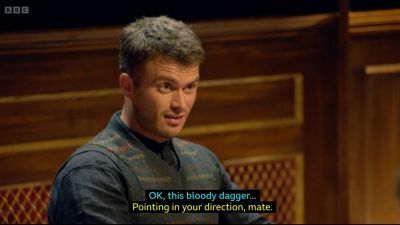 The plot of Macbeth, there.
A lot of the fan discussion this year has revolved around the faithful and their apparent lack of idea permanence. Thoughts were floated, thoughts appeared to be discarded and never picked up again. If we're to believe the edit, the faithful were in a real-life Seinfeld, where nobody learns anything from one episode to the next.
We are prepared to give the faithful quite a large benefit of the doubt, and suggest that this was an artefact of the editing: because there was so much happening, and relatively little time to show it all, many theories were kept bubbling but the edit had to follow the theories that would be most useful for today's narrative. And, certainly in the first half of the series, a lot of the eliminated contestants told The Traitors Uncloaked that they had suspicions on Rachel; was this not brought up in the castle, or was it the edit being a bit skew-wiff?
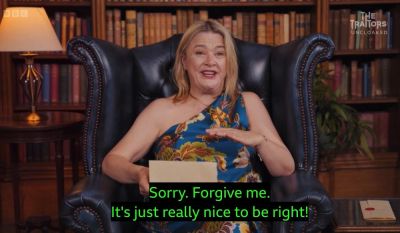 Harriet knew it.
Another artefact of the incident-packed series was how the blokes in the series tended to merge into one being. Stephen was one amongst half-a-dozen young men who seemed to be in the background of the show, occasionally got some attention but were generally sidelined by the various discussions amongst the women. To not know players who leave at the start of week two is unfortunate; to have Adam leave in episode eight having had about eight minutes of screen time is not good.
Halfway through, there was a mission to rank the remaining players. Who is the fairest? Matthew, the consensus answer; but we viewers had no inkling why his peers rated Matthew so highly, and that's a black mark for the editors. If they hadn't faffed about so much with the Secret Traitor in the first week, we'd have been able to know Joey, Jeffie, and Jamey a little bit better before they were bandered. (Bandered? Banished or murdered. We're trying to make it a thing, and not succeeding.)
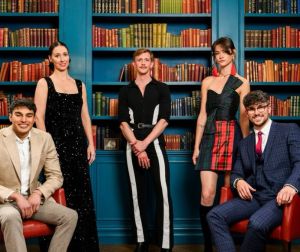 The final five, as diverse as they were likeable.
Enough already
Can we now draw a line under the whole secret relationship gimmick? It has served us well, providing the spark for series 1 to catch fire, and some dramatic relief for viewers in series 2. Last year, the sisters said they were going to play as sisters, which seemed to be an error. This year, we had Ross and Ellie who went in as a secret couple; and we had Judy and Roxy who went in as a not-particularly-secret mother and daughter.
Both of the secret relationships were bandered in short order, Judy was out of the game even before they revealed the Secret Traitor, Ross was next to go. And the gimmick of putting everyone on a "family tree" sparked ever-more bizarre speculation from the fans, that there were other couples to be found, and perhaps everyone was related to everyone else like this was less The Traitors and more The Brady Bunch.
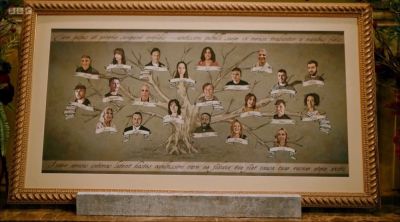 The Latin around the tree translated roughly as: be careful who you trust with your own blood, the sharpest knives might be betrayed by one of faith. Among friends there are knives, so beware lest it lead to your ruin and exit.
Secret relationships are no fun for the players, it's an extra level of deceit they've got to show, and people can't work at finding the traitor if they're also hiding more basic facts. And while the reveals are good fun for the viewers, and provided a short-lived high for Uncloaked, we think they're a net drain on the game. Secret relationships might, at the very least, be put on ice for a few years, to come back when we don't expect it.
We're also calling enough on the "chests of chance" tie-breaks. There was a vote, it did not produce a winner. There was a re-vote, it did not produce a winner. Fate then decide who leaves. This has the capacity to completely alter the course of the game, and did actually alter the course of the game.
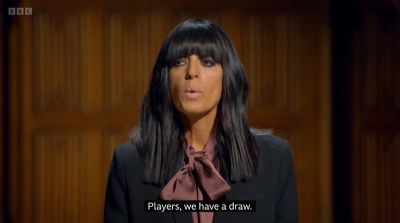 Bring out the pools panel.
And we're not saying that random draw should not be an option, but that it should be one option amongst many. Claudia could have an array of Draw Straws, and pick a tie-break mechanism at random after the first vote ends in a tie. The options could include:
- Extend to further votes.
- Allow the other players to have some discussion amongst themselves.
- If they still can't decide, have a fresh vote with the original tied players all exempt, so the group has to lose someone who is less suspicious.
- Votes at previous round tables may count against someone, or in someone's favour.
- A random spin of the Banishment Dagger, perhaps amongst the tied players, perhaps amongst everyone.
- ...or the Banishment Dagger is a secret double vote if that's needed to break the tie.
- Maybe there's no banishment, but a double murder to follow.
- Or a double banishment and no murder.
CarrotShield In A Box: one player picks a box and looks inside it, and tries to convince the other player to take a box without a shield in it.
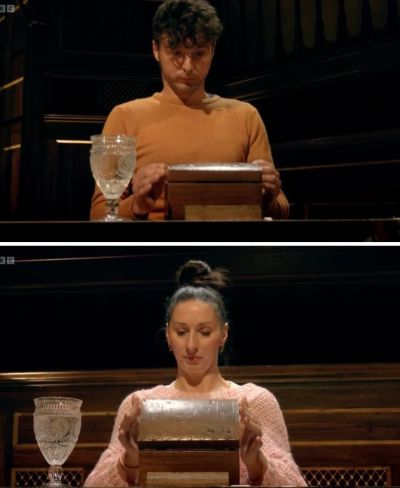 Who is safe tonight?
We were lucky in the first three series that a tie didn't take place; we've now seen three in the last few months, and they're a viable part of the game. The producers could do more with the tie than they currently do.
After the Double Vote Dagger, some other ideas for gentle rule expansions spring to mind, remembering that these have got to be simple enough for Claudia to explain in one breath:
- The Secret Traitor: we'd have played it exactly as seen on screen, but with one crucial difference. Turret selects three candidates for murder, Secret Traitor picks from the shortlist. And we keep the Secret Traitor hidden until banished or recruited.
- The Enduring Shield: one of the shields awarded on the first day will last until it deflects a murder. Traitors know this is in play, but not who has it; Faithful may or may not know.
- The Healer: a Faithful may protect one other player from murder each night. Power lapses after it's actually saved somebody.
- The Clairvoyant: you are told how many Traitors are in play at that moment, but not who they are. (Or: guess three names, be told how many are Traitors.) Feels like a mission reward in the second week.
- The Slayer: at the end of a round table discussion, you may accuse someone else of being a Traitor; if right, they are banished at once and the vote is cancelled. This could be a third-weekend cliffhanger.
We wouldn't want to introduce more than one of these ideas each series, and perhaps none of them would actually work on television.
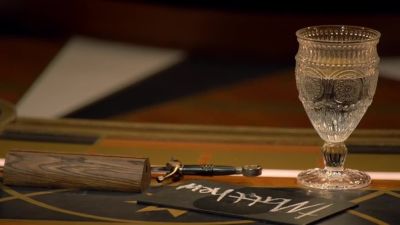 Fat lot of use that was.
It's interesting to consider how this series, and the recent Celebrity series (which the contestants here hadn't seen), affects future strategies on The Traitors. Twice, a murder has happened that was an absolutely obvious lead to a Traitor (Jessie to Stephen in this series, Clare Balding to Jonathan Ross in celebs), and twice the Traitor has escaped detection or even significant heat at the subsequent round table. Perhaps the most obvious move is the one they're playing; perhaps the Traitors need to mix up obvious and subtle choices; perhaps everyone needs to stop fretting about "the obvious move" because it may or may not be a bluff and the whole thing is even more confused than a meeting of the Ed Gamble fan club.
This series has certainly put the lie to the idea that only the bad guys win. Towards the end – even before the win was assured – Stephen and Rachel attempted to soften the blows. Roxy, murdered at the end of episode 10 to spare her the heartbreak of betrayal in the final. Jack, sent on his way "for reasons that will become clear shortly", and honouring a promise that Stephen wouldn't declare "I'm a Traitor". Other social games abide by the maxim "kill with grace, die with dignity"; this year's cast did their absolute best to honour that ideal.
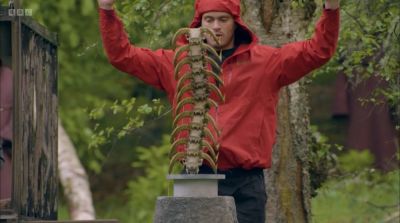 From one of the missions, a teetering, toppling, tower of skulls.
This series has also put a lie to the assumption that Traitors can only win by backstabbing each other. The Traitor Carousel of series 2 seems like a distant memory; this series' Traitors twice spurned the offer of seduction, and the Celebrity series' pair didn't even get that chance. Last year's musings of "how do I throw Bobby under the bus before she chucks me under it?" should be less urgent next time.
We are calling out the producers for not being genius enough. One of the missions started with everybody getting a shield, and then contestants choosing to sacrifice each other (or themselves) in exchange for cash. The contestants could have said, "fine, no murder tonight is worth £10,000 out of the huge prize pot" and sat on the grass and made daisy-chains for half an hour. Or they could have said, "right, we're sure X is a Traitor, they'll be the only murder candidate" and put a tiny bit of gold in. The only people who would have had reason to object: the Traitors.
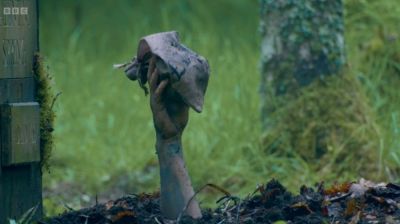 Money doesn't grow on trees. Though it does sometimes get handed to you by a disembodied hand from beyond the grave.
"I get paid to plant seeds"
At heart, The Traitors is a people show. We cannot watch it for the mystery, because we know exactly who the Traitors are. Instead, we watch it for the human interest. A grab-bag of other moments and things we want to remember.
"The traitor will be the tiredest, so look for the person drinking extra coffee", says Rachel, while holding a mug full of coffee.
Rachel said that she had had FBI training. Actually, this column thinks we were in those lessons as well, hosted by Keith Duffy Out Of Boyzone.
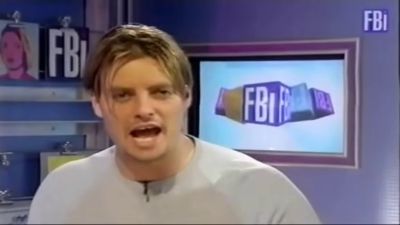 Everyone's favourite FBI trainer.
We must point out that "micro-expressions", which Rachel claimed to have had training in, is a made up pseudoscience that uses neurotypical white middle class behaviour as a stick with which to beat everyone else. File alongside "lie detectors" as absolute codswallop.
The Faithful team might have put two and two together and eased back on Jade. If she were a Traitor, she'd have been up late plotting murder, then had to go back to the hotel fifty miles away to sleep, and then found time to do some stupendous make-up. Never mind being a Traitor, that would make her a Time Lord.
"Friendship is on one level, the game is another. You don't hate the player, you hate the game."
 Tom Daley, take note: the ancient Egyptians were right.
"Traitorous" slipped into the show's vocabulary this year, describing the actions done by the Traitors team. After a moment's thought, we prefer it to the synonym "treacherous", because "traitorous" is only used on The Traitors show.
BBC1 moved this year's shows to the 8pm hour – it cost us a few bleeped expletives, but suddenly the show became accessible to younger children and families who wouldn't be allowed to stay up till 10 on a school night. Viewing figures went even higher than before.
As ever, when a reality show has 100 hours of footage to edit for each night's episode, they can choose some of the most beautiful and telling shots. The Traitors looks good, every picture and every little tweak to the colours helps to tell the story.
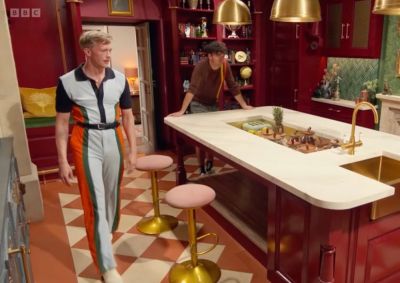 Stephen borrowed an outfit from Anneka Rice.
And, as seems to be the way, The Traitors picks a wonderfully pleasant cast. The final five were a microcosm of Britain at its diverse best; all 22 candidates were the kind of person we could cheer for. Sure, we were annoyed at the way some of them played the game, and a few contestants impressed us more than we dared hope, but at no time did this column think that anyone would be an unworthy winner. We were rooting for everyone, and it's only a shame that not everyone could win.
January is a bit of a rubbish month. The nights are at their darkest, Christmas is receding into the past, it's cold and it's miserable. And, for twelve nights, we all have a reason to stay indoors and gather round our screens. The Traitors provides human warmth at the time when we need it most. For that and for many other reasons, it's a top-drawer show.
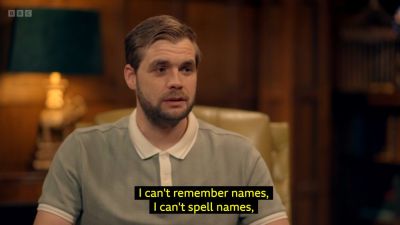 You'll fit in wonderfully!
Other news
No Quizzy Monday report, because there was no Quizzy Monday. It's back on the 23rd.
If you were looking to see the Eurovision Live Tour this summer, don't bother. It's been cancelled. Due to "unexpected events", whatever that means. Refunds will (apparently) be going back to anyone who bought tickets.
This week, it's the return of ITV's brightest and most-watchable show, Tipping Point (weekdays). We also have a new run of Got Talent (Sat). Mas Fhior is a new quiz on BBC Alba (Tue), and Chateau DIY: Win the Dream gives away its top prize of a chateau in the Loire (C4, weekdays).
To have Weaver's Week emailed to you on publication day, receive our exclusive TV roundup of the game shows in the week ahead, and chat to other ukgameshows.com readers, sign up to our Google Group.