
Weaver's Week 2026-03-08
Last week | Weaver's Week Index | Next week
 Enjoy him while he lasts.
Richard Osman is to leave House of Games (3). The exceptionally tall chairman will spend more time writing his hugely successful Thursday Murder Club books. Seriously, these books are massive hits, shifting well over half-a-million copies last year alone. Pile them one atop each other, they might even reach Richard's armpit.
Speculation has abounded about the next host of everyone's favourite teatime comedy quiz played in armchairs; all we know for sure is that there will be a proper regeneration scene before Richard leaves.

Channel 4's contribution to Sunday nights has been this pleasant programme, made by Mothership TV (a subsidiary of BBC Studios), which said it wanted to find a bunch of "secret geniuses" from around the islands.
Both of these words carried a specific meaning for the show. "Secret" in the sense of "someone who was not standing up in the pub and shouting 'I'm a genius!'"; given the typical reaction to self-promoting people in general, and intellectuals in particular, this would be pretty much everyone.
"Genius" in the sense of "good at doing tests of language, number, memory, spatial reasoning, and the combinations that they love in Mensa." Yeah, Mensa, the society for people who are very good at doing Mensa tests, and members prove it by paying Mensa to take their tests. Whether in cash or in tests, Mensa have part-paid for six hours on network television, and can rather hope to come out of it looking rather good.
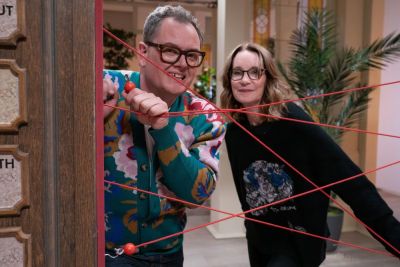 Alan Carr tries to put a line onto a hook. Susie Dent snickers on.
The production has certainly been able to get some familiar hosts. Susie Dent has been a regular on Countdown since the last century, and brings the quiet authority of someone who knows what they're talking about. She's employed to put a human face on the puzzles, to make them more approachable, to explain some of the science behind the exercises.
Alan Carr is also involved, his first big new project for Channel 4 since I Don't Like Mondays almost a decade back. Alan was engaged for this show back in its initial planning stages, way before his time on The Celebrity Traitors brought him to a new audience. (Secret Genius was filmed shortly after The Celebrity Traitors, and Alan almost spilled the result to a cameraman who offered congratulations.) Alan brings his usual large personality, camp charm, and self-deprecating jokes.
Heating up
The first four episodes were self-contained little contests. Twelve contestants from the same geographic quadrant were brought to "Secret Genius HQ" in Manchester, where they took part in up to three rounds of tests.
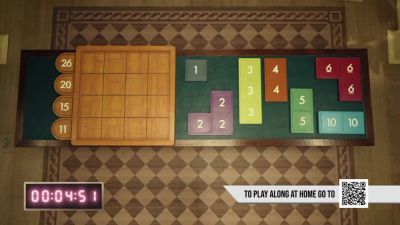 Fit the blocks to make the row totals right. And don't rotate the shapes!
First there was a speed round, two relatively brisk problems that should be solved within twelve minutes. Eight progressed from this round, usually anyone who got both right, or one and a quick but incorrect answer to the other puzzle.
Then there was a pairs round, one puzzle tackled by two heads. The best performer in the speed round had first choice of partner, then the next-best performer, and so on. These pairs puzzles used hidden information well – anagrams that were only visible to one of the pair, or parts of a sequence that were different from the other. Top two pairs – so four people – remained after this.
The final was another, somewhat longer, puzzle – usually split into two or more little stages. Worst result in this puzzle left the contest, with the remaining three progressing to the final.
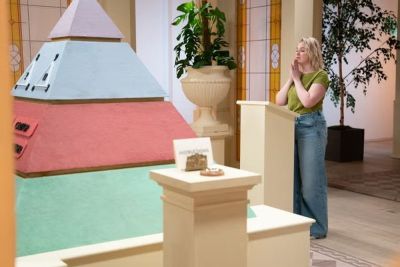 A pairs puzzle, where each partner only sees partial information.
Secret Genius said that it was testing four areas of the brain: memory, verbal reasoning, numerical reasoning, and "fluid reasoning" – spotting patterns and applying them. Generally, the first two puzzles would use two of these areas, the pairs puzzle would use the other two, and at least three would be tested somewhere in the final puzzle. The people at Mensa had input to make sure the puzzles were good tests for the relevant area, and had members take the tests to ensure that they were properly graded – it wouldn't be any good to start the series with a finals-level stumper.
Each puzzle was presented in the most viewer-friendly way possible: we saw the puzzle with one person or pair, then worked through the solution with them. Susie and Alan were watching footage in another room, and added comments to explain or clarify what was going on. After we'd finished with the first player, others took the tests, and we'd only see edited highlights of their time.
If we have one criticism, it's that we had to pause the programme if we wanted to play along with the puzzle – some were only on screen for seconds at a time, and in a pitheringly small typeface. We made a similar criticism to The 1% Club after their first series.
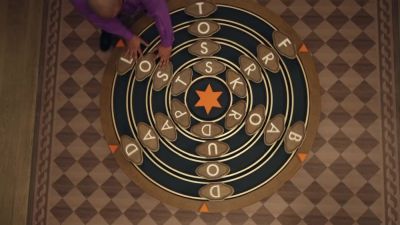 Add the same letter to each set, and you might be able to anagram them into words on a common theme.
"A bit of a wasted journey" is always a potential criticism of shows like this one, and we found the winnowing to be a little too fast for comfort. Four contestants come to Manchester, see a couple of puzzles, spend hours waiting in a lobby, and leave. It feels a bit of a waste; would there be merit in cutting from twelve to six after the pairs round?
The geographic division was interesting: "North west and Northern Ireland" seemed to feature anyone from north and west of Coventry, though didn't appear to have any contenders from Northern Ireland. "North east and Scotland", "South east England", and "South west and Wales" were the remaining divisions; the last of these appears to be somewhat less populous than the others.
Final people
After four heats, twelve remained to visit Oxford for the series final, which was contested over two episodes. This also began with a speed round, after which four were eliminated. Again, that felt like short-change for the contestants. The "pairs" round became a "duel" round, one from each pair would be eliminated. Four became two for the final, and the better performer here was the winner.
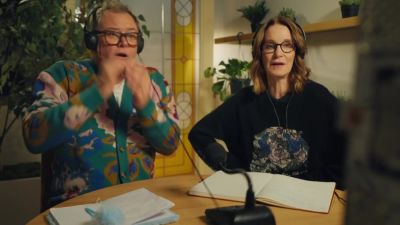 The hosts eavesdropped on footage of the competition.
By the time of the final, it was clear that Secret Genius was a people show, the puzzles were a method for it to tell its stories. Pretty much everyone could bring a history of being ignored, dismissed, passed over, or horrendously bullied. Week after week, one contestant might allude to their formative years, and see nods of recognition from all around. Why don't people stand up in the pub and declaim themselves to be geniuses? That's why.
The programme also glanced at the differences between genders, how people socialised as female are generally encouraged to be less ambitious and to hide their talents from public view. Mensa's membership is roughly two-thirds men; the Secret Genius finalists were two-thirds women. This is interesting, perhaps this deserved a brief mention. "Imposter syndrome" is a thing where people are actually competent but feel inadequate to the task; if there's a second series we might usefully have a quick discussion of this phenomenon.
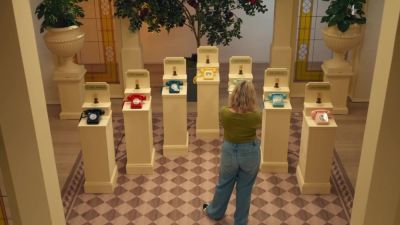 It's like the Deal or No Deal fan convention!
We saw this with contestants doubting themselves. Take time to check your answer, maybe. Take time to repeat your working, maybe there isn't time for that kind of assurance. The first heat featured a painfully shy contestant, another who could remember every numberplate in her area; the series covered all ages from student to retiree, all jobs from coder to tree surgeon to lorry driver. None of the heats featured anyone who didn't deserve to be there, and nobody was set up to look like a fool.
Worth a watch?
We might assess Secret Genius on lots of levels. Was it an interesting and entertaining programme to watch? Very much so. Can we honestly recommend it to our readers? Yes; if the show sounds like it might be your thing, then it probably is. (Watch on All 4, registration required, .gb only)
Was the programme well-made? On that, we have to be a bit more nuanced. The look and feel was consistent and built an atmosphere of calm and serenity. The sound design was less to our taste, there was more music playing than the competition perhaps deserved. The show had room for people to tell their stories, but so many people left relatively quickly so it felt like they were bit-part players on the programme. Particularly in the final, it felt rude to invite people to Oxford and then dispense with them after just a few minutes. We appreciate that this will have been a decision from Channel 4, who didn't want to commit to two-hour heats of an untried format; the format has now been tried, and this is an open goal for improvement.
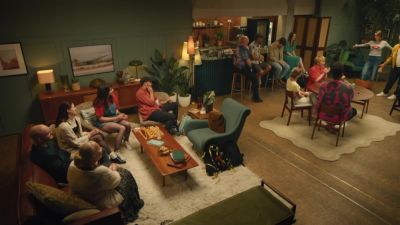 Twelve very clever contestants, one very clever host, and Alan Carr.
Did it meet its goals? That is an open question. In publicity for the show, Mensa guesstimated that there are a million "secret geniuses" out there. That'll be the population of the country, divided by 50 (because Mensa is a club for the top 2% at their tests), less the number of current and former members. Yes, that rounds off to about a million. The stat does beg the question of whether Mensa is the sole arbiter of genius, or whether intelligence can accurately be measured by logic tests; we don't propose to summarise this debate here, other than to note that many people have very strong opinions.
Yes, we were rooting for pretty much everyone to succeed; this column had our favourites, of course, but when they were defeated it was clear that they'd been taken out by a better player (or knew they'd made a mistake to take themselves out). And that meant that whoever emerged victorious from the final, they would be a worthy champion. Many of the other contestants took their own victories – extra confidence that they are wonderful people who can do great things, or proving themselves to their friends and family.
 Ice creams all round.
Alan Carr is at his best when he has someone to rein him in; he was given enough room to be warm and witty (or warm and dad-jokey), but not so much space that he dominated – this would never become Yet Another Alan Carr Show. The tone was bright, breezy, brisk, playful, warm, and efficient. For this column, Secret Genius brought to mind The Piano, where ordinary people demonstrate extraordinary skills in front of their peers. It felt like the contestants all had a good time and came away with a smile in their lives.
Quizzy Mondays
A couple of Redemption Weeks on House of Games (3). Last week, Michelle Ackerley and Karen Hauer were delightful to watch and didn't trouble the scorers, Geoff Norcott did keep the points ticking over, and Katie Derham wowed us with knowledge to take the trophy.
This week, Sarah Keyworth blazed away on Monday's show, and named three Taylor Swift albums faster than her stadium tour sold out. (Taylor's stadium tour, we don't think Sarah's announced a stadium tour - yet!) Kimberly Wyatt and Tomorrow's Star Melvin Odoom were locked together in combat, and Josh Jones was consistently thereabouts but never there. But could Minus One Melvin earn redemption through quiz? You'll have to watch and find out.
Milena Melcharek scored the final heat win on Mastermind, with perfection on the operas of Giacomo Puccini and a very decent GK round. Strong performances from Jacob Roberts (taking Jimi Hendrix) and Keith Hickling (Wilfred Owen); Sarah Skelton might have been a little under-prepared on Josiah Wedgwood, but turned in the night's best second round.
Semi-finals begin next week, all the heat winners return with a fresh subject, and they're drawn together for the convenience of the producers rather than any attempt at keeping the best scorers apart.
Manchester kept their University Challenge dream alive, beating LSE by 150-120. It looked an unlikely victory with eight minutes to go, as LSE led by 100-55, and at least three times LSE had mentioned the correct answer while conferring before zigging away from it. Manchester's star buzzer Kai Madgwick came through in the closing moments, their raised elbow picked up six of the last seven starters to secure the victory.
Through their three wins, Manchester have scored consistently: 170, 160, 150. But these points only tell part of the story; overall percentages 61%, 51%, 48%, and this week's bonus rate of 50% is even lower than in their loss to Edinburgh. The side remains strong on History and the occasional Mixed Bag questions; they are very weak on Literature and on Philosophy & Social Sciences. We expect Manchester will play next week's losers, Sheffield or Imperial.
Other news
Oh, go on then, who do we want to be the new House of Games (3) host? There's plenty of love for Sue Perkins, lots of people have mentioned the usual comedy-and-panel-show squad from the Dave channel. Given his general rubbishness at quizzes, Minus One Melvin Odoom would be a suitably arch booking (and we're sure he would be a cracking host).
Let's throw in another name: Lauren Laverne. A warm and witty person, whose show on 6 Music builds a little community of listeners. We were particularly impressed with Lauren's stint on Pointless a few years ago. She can rattle along with anyone, and would be sure to bring a different style to the show while retaining much of its charm. House of Games (3) catches light from the kindling of players who are relaxed, and Lauren is great at putting people at their ease, chatting with mates.
We don't think that the BBC needs to take House of Games (3) out of production at this time; a great format will survive a change of host, even one who is as closely identified with the show as Richard. Indeed, if anything could profitably change on the Beeb at tea-time, it's the 5.15 spot on BBC1. They make enough quiz shows to have something new and something good at 5.15 from October through Easter, and a bit beyond. It is a deliberate choice for BBC1 to fill almost every evening with a repeat of Pointless, when they could be showing new The Finish Line, Bridge of Lies, The Answer Run – yes, even The Inner Circle. 5.15 could be reliable as New Quiz on BBC1.
House of Games (3) is made by Remarkable Productions, which used to be part of Endemol, and then got bought up by Banijay. We heard this week that Banijay will take over All3Media, the company that makes such shows as The Traitors, Gogglebox, and many many more. The merged company will make approximately 20,000 hours of television annually, according to a press release. There are 8760 hours in the year, so even this column may have difficulty watching all of the progs. All of this is contingent on regulatory approval, so don't get your hopes up for a Pointless Traitors special just yet.
The TLC channel has confirmed that they've ordered a new series of Mock the Week. TLC also said they'd commissioned Unacceptable, in which a panel of comedians attempt to persuade the audience that their views – whether daft, dangerous, or ill-advised – are the best. The comedian Ed Gamble hosts, with permanent panellists Joanne McNally and Richard Ayoade. Any similarities to Radio 4's long-running Heresy are surely in the imagination of the viewer.
NBC has ordered a second series of Destination X, the series taking a bunch of people around Europe on a coach. NBC say it was the channel's biggest new series of summer 2025, though that does feel like being the least inedible school dinner. The BBC's more successful series was a co-commission with NBC, so this could be good news for fans of Rob Brydon On A Bus.
It's bad news for fans of Rob Brydon On A Giant LED Screen, though, as The Floor gives away its big prize (ITV, Sun). We plan to review The Floor next week. Final also for The Great Pottery Throw Down (C4, Sun). Over on S4C, a new run of Y Llais spins the big red chairs (Sun). BBC1 daytime gets The Finish Line racing back on screens (weekdays), while ITV drops most of its daytime quizzes for horse racing.
To have Weaver's Week emailed to you on publication day, receive our exclusive TV roundup of the game shows in the week ahead, and chat to other ukgameshows.com readers, sign up to our Google Group.