
Weaver's Week 2026-06-28
Last week | Weaver's Week Index | Next week
Way back in February, this column marked its 25th birthday with a retrospective edition, and a live stream. Many memories were brought to life, much fun was had, and it emerged that this column remembers about 65% of what we write. Many thanks to Dan for running the event, and especially for being such a great interviewer.
A few questions got asked on the stream, we never got around to answering, and this column promised to pick up the questions a little later. With the firehose of new shows easing off, "a little later" means two columns, starting right now.
A better Prisoner's Dilemma
The stream included quite a discussion on the "Prisoner's Dilemma", which we see at the end of shows like The Inner Circle or The Bank Job.
 We can do better than this.
What's the Prisoner's Dilemma? Prize money has been put in a pot, and contestants Alice and Bob have options. They can choose to "split" it equally between them, or to "steal" it all for themselves. Alice choosing "steal" while Bob picks "split" wins the whole pot for Alice. Both of them choosing "steal" means neither wins a penny.
This column's view is that the dilemma makes for poor television; either someone's going to emerge swindled, or there's a touching sharing moment.
There are ways to pique our interest, in particular by showing the consequences of the decision. Actions in real life have consequences, but not on programmes such as The Inner Circle, where they get rid of their players straight after playing out the dilemma. What if the contestants returned, and had to tell the rest of the circle how they had behaved, and how much they had won? How would the players act with this new information?
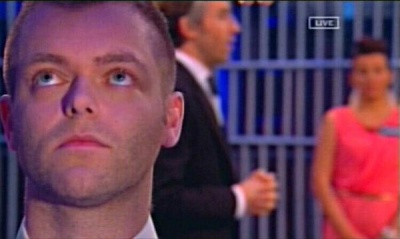 We can do so much better than this.
Lewis offered a thought on prisoner's dilemma: "Alice selects how much money should go to Bob, and how much to Alice. When Bob accepts the offer, both get the money; if Bob rejects it, neither player gets anything."
Allow us to work through a few examples of this.
The prize is £5000. Bob has said that he's after a good holiday, Alice is a single parent for whom a few grand will make a big difference. Alice has done markedly better in the game. Alice offers Bob £1500, and keeps £3500. Deal, and everyone leaves the recording happy.
The prize is £1100. Same characters as before. Knowing that neither can achieve their goals, Alice offers Bob £400, and keeps £700. No deal, and there are fireworks.
The prize is £5000. Same characters, but now Bob has done slightly better in the game and does the division. Bob offers Alice £1800, and keeps £3200 for himself. Don't know how this would play out, which instantly makes it more interesting.
Now we move to The Bank Job. The prize is £150,000, Bob is now after a deposit for a house. Alice offers Bob £60,000, keeping £90,000. Does Bob believe that he's contributed so little to the pot? Or does Bob believe that he's lucky to be here after barely beating Evelyn in the last round, and would take any five-figure sum? This becomes a question of psychology and morals, whether Alice comes across as a nice person, whether Alice wishes to come across as a nice person.
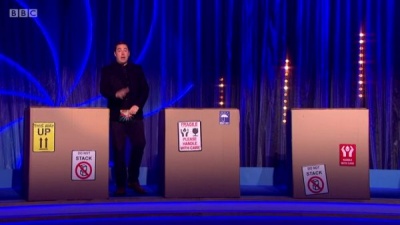 A show with an interesting way to decide its prize.
Name Your Prize is another interesting idea. It could work with both players writing down their chosen sum, and crossing off amounts till a legal answer emerges.
The prize is £10,000.
Alice offers: Alice £7000 Bob £3000
Bob offers: Alice £4000 Bob £6000
Top amount is: Alice £7000 Bob £6000, but that's too much. Ignore the top amount.
Next amount is: Alice £4000 Bob £6000. Deal.
For a two-player game, this is trivial. For a three-player game, like on Divided...
The prize is £10,000.
Alice offers: Alice £5000 Bob £3000 Charlie £2000
Bob offers: Alice £3000 Bob £5000 Charlie £2000
Charlie offers: Alice £2000 Bob £1000 Charlie £7000
Top amounts: Alice £5000 Bob £5000 Charlie £7000. Ignore the top.
Next amounts: Alice £5000 Bob £5000 Charlie £2000. Ignore the top; tie-break rule is that both amounts go.
Top amounts: Alice £3000 Bob £3000 Charlie £2000. Deal. Producers keep £2000.
Or we could say that we ignore everyone's top amounts...
As it's used on telly, "Prisoner's Dilemma" is dull. There are many more interesting options.
Changing channels
Chris asked: "How are channels changing over time as venues for game shows; and might the BBC of another quarter-century pick up more recent ITV shows of today?"
This column is old enough to have started watching telly when there were just three channels. Then there were four, and the quality remained unchanged.
 You're watching ITV. Lost the remote?
Then the satellite channels began, changed names, merged and de-merged. By the mid-90s there were about ten channels commissioning new shows for the domestic market, and another ten showing old and/or imported programmes. Some of the new progs were a bit wobbly, some were grand. We'd probably reached the peak of domestic telly commissioning somewhere around 1997.
And then we got digital telly. The budget that had supported twenty channels now had to be sliced over two hundred channels. It soon became clear that channels would rather show imported programmes of high quality rather than make their own mid-quality stuff. We still have enough great programmes to sustain ten channels; they're spread across two hundred linear channels and a gazillion streamers.
The move to online has continued that process. Not all of the change has been negative: people can broadcast their own shows, online has removed the barrier of convincing someone else to commission your prog out of their budget. It's democratised television, it's made stars out of Zoella and Game Changer and Tom Scott.
 An impromptu meeting of the Tom Scott fan club.
The BBC's new top man, Matt Brittin, put out a statement recently. If we interpret his direction of travel correctly, it sounds like the Beeb would like to end the television channel as we know it. Quite how this would work is a Question And A Half, and this column is still trying to get its head round a potential world without television channels.
These days, game shows fall into four categories, and we'll explain by analogy. There are Tentpoles, shows they can use to build an evening or a channel around – think of The Traitors, or The Masked Singer, or Love Island. Then there are Guyropes, shows that are great to catch and might introduce viewers to new faces – yer Mock the Week, Blankety Blank, Celebrity Catchphrase. And then there's Pegs, endlessly repeatable progs like Bargain Hunt, The Chase, House of Games (3).
What we risk losing is the fourth category: Canvas, shows that are a bit experimental, attract small audiences, and those audiences really love the show. Think of the experimental shows Channel 4 make – Wanted in its day, I Literally Just Told You more recently. Or think of ITV2's experimental shows like Bromans, BBC3's ideas like Hercules.
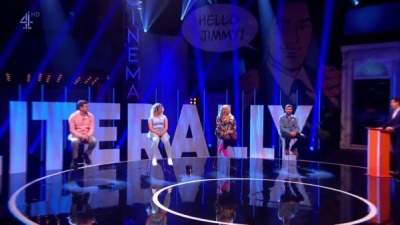 Experimental shows may be difficult to make.
The Canvas shows are vitally important to the future of television, they're the incubator for new ideas and new talent. Love Island returned ten years ago as a bit of an experiment, and grew into the behemoth it is now. Only Connect (2) began life as this obscure quiz hoping to entertain 50,000 people, and it's now BBC2's most reliable show.
Tentpoles are easy to commission and market: you can take out all the advertising space for The Neighbourhood and it'll be a surefire winner, right. Pegs are reliable, produce enough episodes and you'll end up with the Challenge channel, or ITV Quiz, or a round-the-clock stream of Tipping Point. It's the Guyropes, and especially the Canvas, that risk being buried under the avalanche of mid-range telly.
Might the BBC of 2050 pick up ITV shows of today? That assumes ITV still exists in 2050; we'd be surprised if ITV retains its independence until the end of this decade. And it depends on the BBC still existing, which is not a certainty.
Blimey, that got heavy!
Countdown finalists
From our socials, Jinji asked: "What would happen if, when Finals Week begins, a contestant on Countdown was still in the middle of their qualifying run, and they had enough wins and points to reach the finals. Would they compete in the Finals Week of this series, or be required to come back in the next series, or do they get a choice?"
The question arose because Karen Pearson was the daily champion during Finals Week, with four wins under her belt. It turned out that her points total wasn't sufficient, and the question is moot for this series.
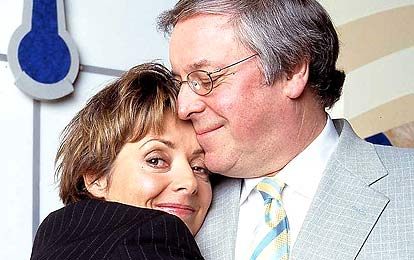 Carol Vorderman and Richard Whiteley.
Contestants have had the choice in the past. Until the early 1990s, Countdown players tended to take the seat in the first quarter-final they'd qualified. This was not always the wisest choice: Michael Stephenson qualified for a 1986 Finals Week as 2nd seed, having won the last six heats; he did not know that Harvey Freeman waited in the draw, and nobody would ever beat Harvey at Countdown.
First player to decline a spot in the finals was Sharon Bridge, in the series at the start of 1994; she'd go on to complete her octo-run during the summer, but lost heavily in the quarter-finals. Two years later, Dennis Fearon won the last four heats, took his place in the finals as 5th seed, won two tie-break conundra, and finished runner-up.
Producers these days seem to want potential Octochamps to complete their eight wins, rather than come back as an artificially low seed. Of course, the problem rarely arises, as the increasingly brilliant standard of Countdown play – and the six-month series – means it's quite rare for there to be any non-Octochamps in the finals.
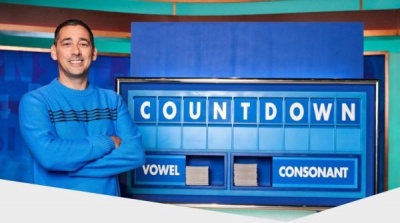 We're going to talk about modern Countdown.
It became a question for this series, because we'd had seven Octochamps, and then nobody won more than four matches. Tom Bashford won four matches at the end of April, but lost to Patrick Thompson. And Patrick would go on to win eight games, score eight centuries, solve eight conundrums, and hit the maximum in 102 of the 120 rounds.
Tom and Patrick met again in the opening quarter-final, and both spotted the niner DENIGRATE in the opening round. Then Patrick pulled ahead, with winning words IMPLANTS and SOUPED, plus a four-large numbers solve. Though Tom did win a round with BUNIONS, Patrick won a couple of letters games, and a numbers round, and emerged 118-64 winner.
Megel Barker was the first Octochamp of the series, splitting his wins around last Christmas's finals. Charlie Harrison won his eighth game at the start of June, with eight centuries and eight conundrums and "only" 92 max rounds. Absolutely level through the first six rounds, then Charlie spotted FRUITAGE, following it with LOUCHEST after Susie's contribution. Charlie won by 120-86.
Luke Selway won his eight during February, eight centuries, four conundrum solves. Callum Ridley picked his eight earlier in the month, with three century scores. A high-quality game, with Luke always looking like he was in control of the match; top marks on a tricky numbers game, and winning word WASPIES gave him a strong advantage. Luke could even have a disallowed word, "rugrat" has a space in the middle; INCOMERS restored the advantage in the next round. With both missing the conundrum, Luke Selway won 102-76.
Our last quarter-finalists were Daniel Face, eight scores above 90 in January; and Ian Kinsella, a solid run in April. With both contenders averaging a century each game, it was no surprise that they were perfectly matched on the letters, including the very Countdown word ESTUARINE. Numbers were more interesting: Daniel's six-small tactic netted an early 10 points, Ian pulled 7 back on a tricksy one-large selection. The game turned when Daniel offered "optioners", which isn't a word, allowing Ian's TROOPIES to win by default. Both contenders scored a century, Ian winning 107-102.
Semi-finals and finals? We'll look at them next week.
Other news
Best of the Web Excellent article from Buzzerblog, on the tips and tricks of great quiz questions. What distinguishes the clues on Jeopardy! from the word salad on The Weakest Link? How does a great foreign language question work on House of Games, and will Michael Sheen prove a better pronouncer than Richard Osman?
Strictly klaxon! Emerging from the smokey doors of the Glitterball this week were Chris Appleton, a "conceptual hair stylist".
Awooga! To the surprise of absolutely nobody, Gladiators has been renewed for a fourth series, still in that slightly awkward 11-episode length. There will also be a celebrity special.
Ben Crabbé has said he'll step down from Blokken after the coming series. Crabbé, now 63, has hosted the daily quiz on Flemish television since 1994, and will have fronted over 7000 episodes when he leaves the show. The replacement host has already been announced, warm-up man Sven de Leijer.
Could you ruin the country? The Wargame is a new counterfactual series from KYTV, in which politicians and entertainers attempt to handle a high-stakes scenario. They'll be working as if there's an actual Russian attack on domestic soil. Participants include Nicola Sturgeon (politician, former leader of Scotland); Michael Gove (from Channel 4's unfunny A Stab in the Dark), Penny Mordaunt (sword carrier and Splash! failure), Ayesha Hazarika (House of Games (3) irregular), and Sayeeda Warsi (from Channel 4's Make Me Prime Minister). Four one-hour episodes in September.
This week Oh no. It's the return of Schedule A, Schedule B, and Schedule C What They're Actually Showing. Good news for game show fans: none of this affects new programmes we're interested in, only repeats of repeats. One new show to note: Your Number's Up (2) is the latest Radio 4 quiz pilot (Sun), and we'll review all four pilot series in about a month's time. Next week, we expect to complete the questions arising from the stream.
To have Weaver's Week emailed to you on publication day, receive our exclusive TV roundup of the game shows in the week ahead, and chat to other ukgameshows.com readers, sign up to our Google Group.