
Weaver's Week 2026-07-05
Last week | Weaver's Week Index | Next week
This week, we conclude a look at the questions left hanging on our anniversary stream earlier in the year.
The best hosts
Chris asked: "defining hosts of the years?"
The Week is old enough to have grown up watching some legendary hosts. Bruce Forsyth on his Generation Game, and then on his Big Night and the loud Play Your Cards Right. Bob Monkhouse seeming to be everywhere. Noel Edmonds, from Saturday mornings into primetime into ubiquity. Nicholas Parsons' manic energy, and Michael Aspel's laidback charm.
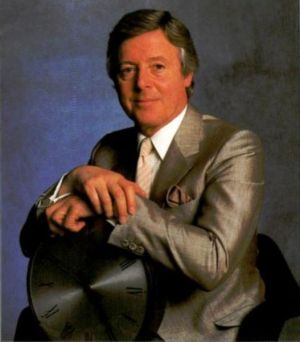 A lovely portrait of Michael Aspel.
As this viewer and television matured, different hosting styles appealed more. Jim Bowen was superb on Bullseye, turning a paper-thin format into a pleasant experience because he remembered we were here to watch folk win something. Janet Ellis was wonderful on the children's programme Jigsaw, a voice of sanity and calm in the increasingly bizarre world of Pterry, Biggum, and the O-Men.
William G. Stewart from Fifteen-to-One sticks out as a defining host. He was the producer who knew his own programme inside and out, and he was the boffin who wrote a chunk of the programme himself, and he was the fierce taskmaster who made sure that the programme was made to the highest possible standards. Fifteen-to-One didn't really showcase the contestants' personalities, it was pure quiz, and turned into a little theatre of its own.
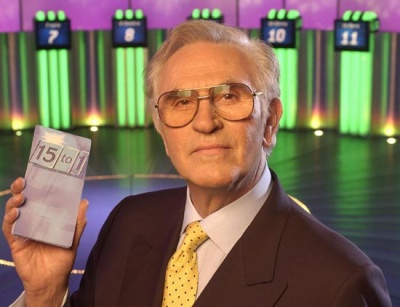 Quiz god William G. Stewart.
Richard Whiteley of Countdown is another defining host, perhaps most clearly measured as the opposite of William G. Stewart. Richard was imprecise, bumbling, rambled on a bit, and always seemed to be about two distractions away from completely losing control of the programme. Was this all an act? Probably. Where Bill was stern and took no nonsense, Richard was lively and laughterful. The hallmark of a great host is that any successor is measured against them, and some would argue that every Countdown host has been in the shadows of Whiteley.
Some great hosts adopt a fictional persona, and draw the viewer and the contestant into their little world. Richard O'Brien had this from the very start of The Crystal Maze; once James Mackenzie had worked out the character of Raven, the series flew. Other great hosts are facilitators, able to make the difficult seem simple: Gordon Burns is a master of the deft explanation and the apposite remark.
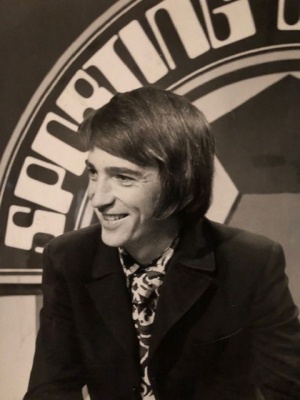 Gordon Burns, from before they invented colour cameras.
Chris Tarrant and Anne Robinson are each associated with one career-defining role – the hosts on Who Wants to be a Millionaire and The Weakest Link, respectively. Both of them are much more than this single show, both of them had talents that weren't on display. They were the right people for the job, and – again – the show is very different without them. Davina McCall could have been forever associated with Big Brother, but kept working on so many different programmes that she remained a star in her own right.
Over the years, this column's profiled a number of game show hosts. We like to honour people like Jeremy Paxman when they retire, or Gloria Hunniford when they've stopped making game shows – so we haven't yet profiled Anneka Rice, because there is absolutely no stopping the whirling dervish of game shows. Others of our profiles had to be hurriedly finished as obituaries, such as the one on Tony Slattery. There's one profile of a fairly prolific host we got part-way through writing, realised that we were slagging them off on every show, saw that the rest of their colleagues thought them difficult to work with, and quietly dropped the feature.
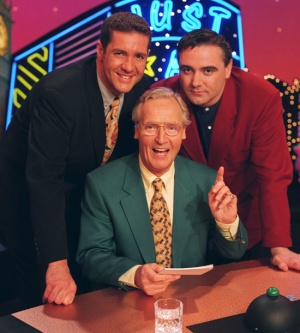 Dale Winton, Tony Slattery, a seated Nicholas Parsons.
We also began to sketch out a possible profile of Phillip Schofield to mark his 40 years on television, where we would have praised his ability to bring the viewer along, make difficult formats feel simple, and how he had become a bit of a cultural treasure. And then Schofield went and brought his personal life to work, and then Schofield wasn't on television. It goes to prove that a host might be superb from a technical and theoretical level, once the public turn against you, your career is measured in days.
Ant and Dec have been ever-presents through this column's existence, whether through Saturday Night Takeaway, Push the Button, Got Talent, Limitless Win, or I'm a Celebrity. They're clever, practised, they know when to be silly and when to dial it in a bit, and they seem like great people to hang out with – there's always a welcome in many living rooms for the duo.
 Ant and Dec wave goodnight to their friends.
We think that any show hosted by Sue Perkins is wittier and wiser and sassier than it might otherwise be. Claudia Winkleman is so much more than the host of The Traitors. Dermot O'Leary is the host we'd most trust to read out bomb-defusing instructions; Dara Ó Briain is the host who could probably defuse the bomb without instructions.
The man who's done more game shows than anyone, Vernon Kay, has still got it. Take a listen to his Ten to the Top feature, a simple pop quiz with unexceptional prizes and no particular point. And Vernon knows it's mostly a bit of bonhomie, nothing serious. Doesn't stop him from treating the format with respect, and the contestants with great care. And when there's the chance of a maximum score, Vernon knows exactly how to ramp up the tension, make this moment stand out from the hubbub of daily life, draw the listener in.
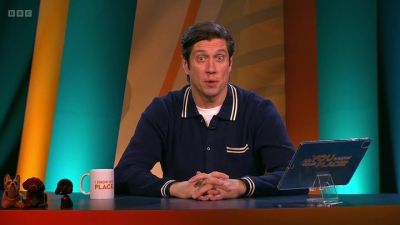 Any chance of a 65, Vern?
And that, we reckon, is the hallmark of a defining host. They make us care about the littlest things.
... what's next?
Lewis asked: "what's the next big gameshow trend?"
Guinevere Purplestar asked: "What's missing? What's the gap in the market for someone to come and fill?"
We'll take these questions together.
As we noted last week, the market is leaving a gap for relatively low-budget, somewhat modest shows; the shows that quietly grow and accrete an audience. It's a problem beyond game shows, we've recently seen daytime drama Doctors get cancelled, and even the gabfest Steph's Packed Lunch couldn't turn into a success.
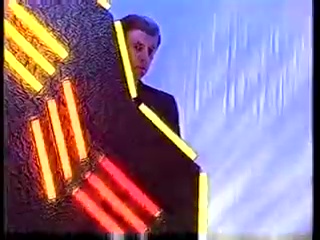 Going for Gold, the sort of cheap show under threat.
The loss of modest shows is a structural problem. Linear channels traditionally offer a curated experience, flowing the audience from one show into the next; if you're a fan of News at One, you might stick around for the light drama afterwards, and the pan-European quiz show after that.
On streaming platforms, it's necessary to go out and find a programme, you're unlikely to come across something purely by serendipity. Every show has to fight to be found, and the battlefield is tilted in favour of the expensive shows, the ones they can't afford to be commercial or critical failures.
Are there ways round this? Discovery Networks has done something different, it showed sample episodes of TLC's Mock the Week – and this coming weekend's Unacceptable – on many channels at once. They're interrupting the normal flow on Dmax and Quest and UK Gardens, and showing this bright new entertainment programme instead. Is it because they're proud of their show and want to show it off to as many people as they can? Or is it that they know that discovery on the Discovery streaming platform is horrible, and need to get as many viewers as they can?
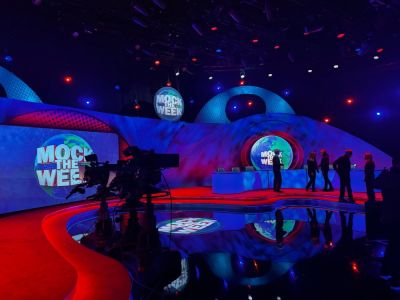 There's no escaping Mock the Week.
The rewarding gap in the market is for a streaming company to have a reliable and cheap programme. But that requires streaming companies to think about the viewers, and we're not convinced that the streamers want to put the viewers first.
Vertical horizon: everything you want?
Another gap in the market: "verticals". What's a "vertical"? It's a show optimised to be watched on a phone in portrait mode, much taller than it is wide. Single shots of a person talking, cut with shots of their backdrop. The initial crop of "verticals" seem to be primarily talking heads and conversations, scripted and unscripted drama stories told in 90 seconds.
And the "vertical" has got to have a reason to come back for the next episode. Constant movement, emotional engagement, some sort of payoff every few minutes, and a cliffhanger for next time.
How could a "vertical" game show work? Perhaps like the Puzzle Corner films of the 1950s, existing footage married to a witty omniscient narration, three questions set and answered today with a cliffhanger for tomorrow's edition. Perhaps it could be an existing format like 1000 Heartbeats, action and drama in a self-contained episode and with a hook to see if the contestant can win again tomorrow.
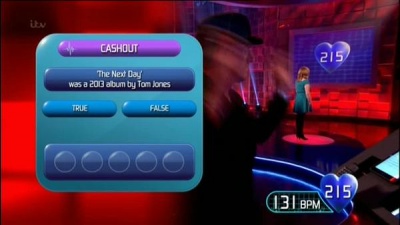 Ripe to become a "vertical" show.
Or it could be something very different: a talent show, with the audience helping to decide who stays in and who goes. A dating format across three episodes: set up the blind date, see the couple on their holiday, learn what they really thought of each other. "Verticals" might be a way to incubate small shows, see what works and what can go big.
The format landscape
Coming back down to the contemporary schedule, and the question of where the game show market is going in the next few years.
Let's start with where it's not going. There haven't been any new craft ideas for yonks – as much as we love Tom Daley and Game of Wool, the show would not have been made with any other host. Cookery also feels like something we get enough of, between them Masterchef and Bake Off and Great Local Menu seem to fill almost the entire year.
Is there space for a talent show? Perhaps there is room for new ideas. Big anniversaries loom for the big two: Got Talent celebrates its 20th series next year, Strictly will mark its 25th run in autumn '27. Surely - surely! - there's got to be a way to showcase talent in other ways.
 Do they still do this on the results show?
This year's fashion seems to be outdoorsy programmes: The Summit went up and down for ITV, The Hunt made a good effort on Channel 4, Bear Grylls' Great Big Bear Hunt attracted bear-hunters to Netflix. And this year's fashion seems to be outdoorsy shows that nobody watches, we don't expect to see any of them again.
Maybe the gym will prove more fertile for programme-makers: shows like Physical Asia and the Indian programme Battleground demonstrate that there's television to be made from push-ups and shoulder-barges and burpeys. Perhaps the hit lies in pushing people to their limits – and beyond their limits. ITV has had The Box sitting on a shelf for months now, and that could be a breakout hit later in the year.
 They want fizzy rosé; they get carbonated grape juice.
Everybody wants the next The Traitors, and can you blame them? But shows based on lies and deceit haven't yet hit home – The Inner Circle is off the screen, and the jury's still out on ITV's effort Nobody's Fool. Perhaps the key point to emulate is that we get to know contestants on The Traitors as people who happen to be playing a rewarding game, and we get to know them as people not as players.
There's always a space for silly shows. Total Wipeout and Hole in the Wall from the aughts, Gladiators from now. Holey Moley, a challenge set on a crazy golf course, will join the daftness at some point soon. Norway's Dumbest challenges celebs on basic knowledge, with the best each week leaving and the last person "winning" a title they don't want; done well, this could be hilarious. Expect more programmes with their tongue planted firmly in their cheek.
And expect more international co-production sets – both Total Wipeout and Holey Moley constructed one set they could re-purpose for many broadcasters, and this seems an excellent way to bring down costs for all concerned.
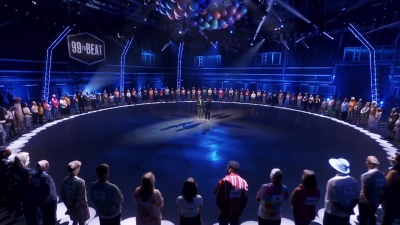 People are coming, everyone's trying.
Finally, there's a market for Massive Multiplayer Games. The 1% Club started the trend, 99 to Beat and The Floor continued it, and we'll look at Dutch format In de Ring at some point in the summer. Who knows, if someone's able to make Ultra Quiz work, perhaps the next big thing will be a round-the-world travel game.
Whatever the next big thing is, we hope to do it justice in a future Week. Thanks to everyone for your questions, must do it again some time.
Countdown finals
Following our report last week, we pick up Countdown with Patrick Thompson and Ian Kinsella in the first semi-final. Nothing to choose between the players in the first three rounds, a pair of eights and an easy numbers game. Nothing to choose in the next three, a six and an eight and an easy numbers game, though both players missed DIAMOND.
It all blows apart after the anecdote, when Patrick has the winner REPUTABLE, nine letters for 18 points. A sneakily difficult numbers game adds another 10 to Patrick's lead. OUTLINERS hits for both players, but Patrick's "notorni" is not allowed so Ian is not out of it. Yet. EGOSURF is a final winner from Patrick. He goes on to win the match 138-99, having scored top marks in 12 rounds.
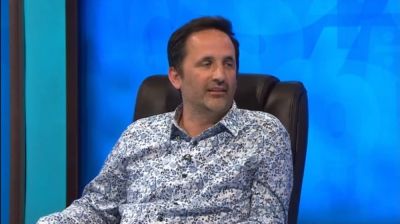 Patrick Thompson, finalist.
Charlie Harrison and Luke Selway meet in the second semi-final. Though Luke had always scored a century in his nine games, he felt like he would not be returning for the final. Luke was right, as Charlie put in his best performance to win 128-86.
Why was this his best? Charlie found the longest possible word in every single letters round. TROPHIES, CASEOUS and TANGELO were his three winners, and a one-second conundrum solve capped off his victory. Charlie also found the solution to three of the four numbers rounds, including a very tricky one-large at the end. He scored the maximum in 14 of 15 rounds, something Charlie had never achieved before. That metallic thing at Patrick's feet? Gauntlet!
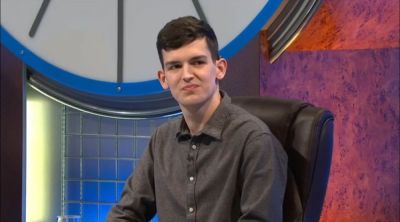 Charlie Harrison, finalist.
That metallic thing in Patrick's hand? Gauntlet, picked up. Patrick Thompson and Charlie Harrison met in the final. It was a game for the ages, the players were almost of one mind throughout. EIDOLONS and URTICATE, words that leave us reaching for the dictionary. REDOUNDS and DIMEROUS, which look like typoes of familiar words. More familiar offerings, FLOATERS and ROASTIE and VOLTAGE and ENAMELS. Nine-letter words, OPERATING and SECTIONED all help to run up the score.
When it came to letters, we couldn't split them. Ten letters rounds, ten perfect words, there's nothing longer available. Would the numbers split our contenders? Not when CECIL was in generous mood, two very easy games, one easy game.
 Into the break, the Teasers were shown against the trophy.
And one very tricky four-large selection, it would prove the difference between our players. 1 and 9, and 25 50 75 100, with a target of 264. This column thought we had it, but no, we'd used the 50 twice. Charlie had 265, one away. Patrick? 264: that's 66 x 4, make the 66 as 75-9, and the 4 as 100/25. Simple when you see it.
Ten points apart going into the final conundrum. Charlie gets it, we have a tie, and we have a tie-break conundrum. Patrick gets it, and he completes a Perfect Game, the best possible score in each and every round of the contest.
ECC Author. Who's that, what's – BUZZ. "Cartouche!" offers Patrick.
It's there.
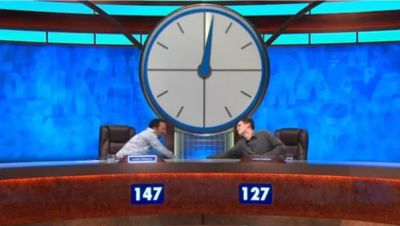 Patrick and Charlie shake after a marvellous game.
Patrick Thompson completes the Countdown 147, the maximum possible today. Charlie's score is 127, which is the greatest losing score in the show's long history. The combined score, 274, is also a record. Have we ever had a Perfect Game in a series final before? No, we have not.
Patrick dedicates his win to his brother-in-law James. And Colin says that both of these players will be back for a Championship of Champtions at the start of next year. We cannot wait.
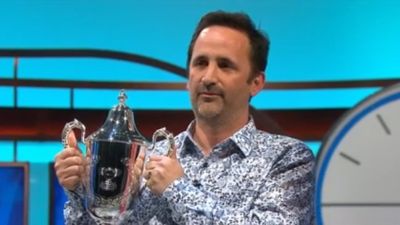 Patrick Thompson, series 93 champion.
Before then? Countdown will return. [ctd series 94]
Other news
Penelope Keith has died, aged 86. She'll be remembered for her sitcom roles in The Good Life and To the Manor Born. In the world of game shows, she hosted a series of What's My Line for Thames in 1988, and Village of the Year for Channel 4 in 2018. She was also a team captain on antiques frippery Going for a Song in 1998.
Eh?! A change to the rules at the European Broadcasting Union, in that they've dropped the requirement for member broadcasters to be located in the European broadcasting area. Now, any organisation can join the EBU, so long as it's a public service media broadcaster, it serves an area with a government aligned with Council of Europe standards, and that government has formal observer status with the Council of Europe.
CBC/Radio-Canada therefore became a full Member of the European Broadcasting Union. As an Associate Member of the EBU since 1950, CBC/Radio-Canada has collaborated with European public broadcasters on journalism, standards and technology, and built productive partnerships with leading EBU Members.
The broadcaster now gets access to the entire breadth of EBU collaboration, including networks for investigative journalism, the Eurovision News Exchange, and Euroradio Music Exchange services. It also means they're going to compete at next year's Senior Song Contest.
Hot Seat back ITV has ordered another 20 episodes of Millionaire Hot Seat, the coffee-powered miniature version of Who Wants to be a Millionaire; they've also sent for a further 15 episodes of the long-form spinoff.
Lots of sport next week, though that doesn't stop TLC from launching Unacceptable on Sunday. If you're still up at 1am that night – and goodness knows there's nothing on at that hour – ITV4 has a couple of episodes of The Summit Australia, so sleep will come more easily.
To have Weaver's Week emailed to you on publication day, receive our exclusive TV roundup of the game shows in the week ahead, and chat to other ukgameshows.com readers, sign up to our Google Group.